How Overseas Buyers Use Purchasing Agents to Source From China

Table of Contents
Using a purchasing agent to source from China lets overseas buyers access platforms like 1688, Taobao, and Pinduoduo without facing language, payment, or shipping barriers. Essentially, the agent acts as your local operator-placing orders, verifying products, consolidating shipments, and handling international shipping with tracking. This guide outlines how to work effectively with agents, the issues they resolve, what to verify before payment, and how to create a scalable sourcing workflow.

1. What Does "Sourcing From China" Mean for Overseas Buyers?
1.1 Are you buying one item or building a supply workflow?
Overseas buyers fall into two main groups:
- Personal buyers who want China-only items
- Resellers/sellers who need stable restocking and repeatable shipments
Both groups "source from China," but their priorities differ. Personal buyers care about simplicity and safety. Sellers care about consistency and control.
1.2 Why do overseas buyers need a different approach?
China's domestic marketplaces are designed for local users. Common constraints include:
- Domestic phone and verification steps
- Domestic payment expectations
- China-only delivery addresses
- Chinese-language customer service and dispute processes
So overseas buyers don't just need "shipping." They need a system that connects domestic platforms to international delivery.
2. What Is a Purchasing Agent, Really?
2.1 Is a purchasing agent the same as a forwarding warehouse?
Not exactly.
- A forwarding warehouse mainly ships what you have already bought.
- A purchasing agent buys on your behalf, inspects items, resolves issues, and ships.
If your goal is reliable sourcing from platforms that are hard to use overseas, an agent solves more problems than forwarding alone.
2.2 What does an agent do that buyers can't easily do overseas?
A professional agent can act as:
- Domestic buyer (places orders locally)
- Payment intermediary (pays sellers using domestic rails)
- Communication layer (handles Chinese-language support)
- Warehouse coordinator (receives, inspects, consolidates)
- After-sales handler (returns, exchanges, relabeling when needed)
This is why using a purchasing agent to source from China is often the most repeatable strategy.
3. Why Overseas Buyers Choose Agents Instead of "Trying Direct."

3.1 What goes wrong with direct purchasing attempts?
Direct buying usually fails at one of these points:
- Registration or verification blocks
- Payment friction or account risk
- The seller doesn't support non-local buyers
- No China receiving address
- Returns are practically impossible overseas
Even when you "make it work once," it often breaks on the second order.
3.2 Why agents reduce risk for cross-border buyers
When an agent handles the China-side steps, you get:
- Clearer order control
- A visible warehouse checkpoint before export
- A path for returns or swaps inside China
- A consistent shipping process you can repeat
That structure is what creates reliability.
4. The Main China Platforms Overseas Buyers Source From
4.1 Why 1688 is essential for sellers
1688 is usually the first stop for:
- Wholesale supply
- Factory-direct listings
- Bulk restocking
For overseas sellers, it's useful because it supports sourcing at scale. The challenge is the domestic-first workflow, which is where an agent helps.
4.2 Why Taobao works for everyday variety
Taobao is often used for:
- Broad retail selection
- Niche items and accessories
- Small-batch personal shopping
If you want "almost anything you can find in China," Taobao is typically part of your sourcing mix.
4.3 Why Pinduoduo is attractive but easy to misunderstand
Pinduoduo can offer substantial value on:
- High-volume household items
- Factory surplus styles
- Domestic deal-focused listings
But it also carries a higher risk of misinterpretations. That makes inspection and verification more critical.
5. How the Purchasing Agent Workflow Works Step by Step

5.1 What does a real order flow look like?
A standard process for using a purchasing agent to source from China looks like this:
- Find an item on 1688/Taobao/Pinduoduo
- Submit the product link and requirements
- Confirm item details (variants, size, bundle contents)
- Agent purchases domestically
- Item arrives at the China warehouse
- Warehouse scans and checks the parcel
- Photo inspection or quality check (optional but recommended)
- Consolidation (combine parcels if needed)
- Repacking and labeling
- International shipping + tracking milestones
This workflow is reliable because it has a "control point" before export: the warehouse stage.
5.2 Which step prevents most disputes?
The most significant dispute reducer is simple:
- Verify item contents before international shipping
Many overseas disputes happen because listings show "usage scenarios" rather than what is included. Photos and checks at the warehouse fix this.
6. What Overseas Buyers Should Check Before Choosing an Agent
6.1 Does the platform support link-based DIY ordering?
A strong agent platform should let you:
- Paste a link
- Choose variants
- Add notes
- Submit multiple items efficiently
DIY ordering is essential because it reduces miscommunication and speeds up repeat purchases.
6.2 Is warehouse visibility transparent?
Your platform should show clear milestones like:
- Arrived at the warehouse
- Inbound processed
- Inspection completed
- Ready to ship
- Dispatched
If warehouse steps are invisible, you lose control, and your timeline estimate becomes guesswork.
6.3 Can the agent provide inspection evidence?
The most practical safety features are:
- Photo inspection
- Basic item verification
- Optional quality check notes
If you're sourcing for resale, inspection becomes even more critical.
6.4 Are after-sales rules realistic for overseas buyers?
Overseas buyers need China-side handling for:
- Returns and exchanges
- Missing accessories
- Wrong color/size
- Relabeling for resale workflows
If a platform can't handle after-sales in China, the buyer takes the full risk.
7. Common Traps Overseas Buyers Fall Into

7.1 Misreading listings and bundle options
This happens a lot on deal-heavy platforms. Listings can include:
- Component-only pricing
- Partial bundles
- Optional accessories
- Unassembled items
Before ordering, I always verify:
- Exact contents
- Material and size
- Whether accessories are included
- Which variant is selected
7.2 Underestimating shipping complexity
International delivery isn't one straight line. It includes:
- Domestic delivery to the warehouse
- Warehouse processing and consolidation
- Export handoff and line scheduling
- Customs
- Local last-mile delivery
A good agent makes these steps visible so buyers can realistically estimate the time required.
7.3 Skipping inspection to "save time."
Skipping inspection often costs more time later, because problems are discovered too late-after export-when fixing them is difficult.
8. How Different Buyer Types Use Agents
8.1 Overseas Chinese and international students
They usually want:
- Easy ordering from domestic platforms
- Stable forwarding
- Simple tracking visibility
- Support that replies fast
They benefit most from photo inspection and one-click consolidation.
8.2 Micro-sellers and group buyers
They often need:
- Multiple items per shipment
- Consolidation and repacking
- Strong warehouse processing
- Clear tracking events
Group buying is easier when the platform supports batch ordering and structured workflow.
8.3 Amazon/eBay/Shopify sellers
Sellers prioritize repeatability:
- Stable sourcing channels (especially 1688)
- Consistent inspection rules
- Relabeling or packaging support
- Predictable shipment schedules for customer delivery planning
For sellers, using a purchasing agent to source from China is less about one order and more about building a pipeline.
9. How KongfuMall Fits Into This Sourcing Model
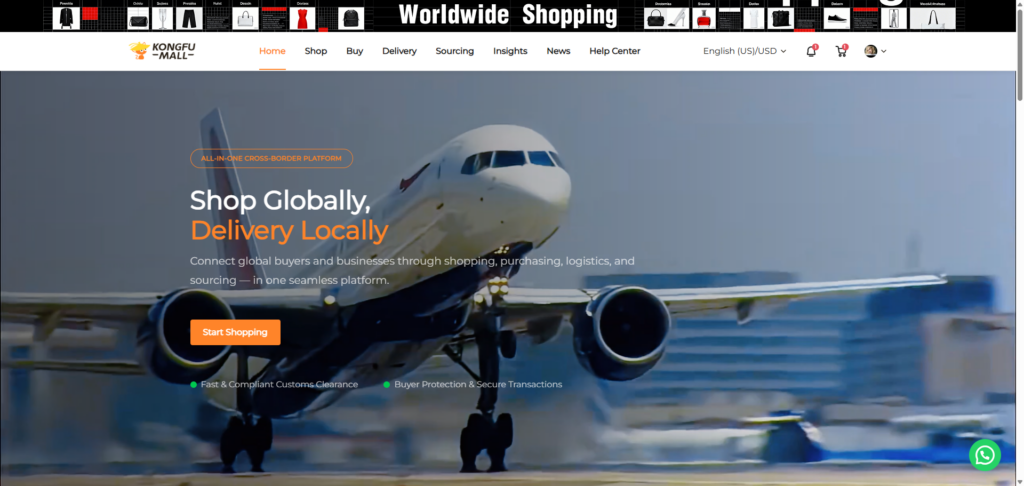
9.1 What KongfuMall is built to do
KongfuMall is a Chinese purchasing and forwarding platform designed for global buyers. It supports sourcing across multiple China marketplaces and helps buyers handle the whole workflow:
- Link-based DIY ordering
- Domestic purchasing from China platforms
- Warehouse receiving visibility
- Photo inspection and verification
- Consolidation and combined shipping
- International forwarding with trackable steps
- After-sales handling support, such as returns and relabeling
- Payment flexibility (including standard international options)
The main benefit is that the "China-side" steps are centralized, which reduces blind spots.
9.2 Why centralized handling improves reliability
When purchase, warehouse, inspection, and shipping live in one system:
- You reduce handoffs
- You reduce miscommunication
- You can catch problems before export
- You can repeat the same process at scale
That is the real advantage overseas buyers are paying for: control.
10. A Practical Checklist Before Your First China Sourcing Order
10.1 A reusable checklist for safer sourcing
Before your first shipment, confirm:
- Can I submit links from 1688/Taobao/Pinduoduo?
- Can I clearly select variants and bundle options?
- Will the warehouse show inbound scans and processing status?
- Can I request a photo inspection?
- Is consolidation easy, and are the rules clear?
- Can I see the shipping calculation logic or the estimate method?
- Does tracking show real scan events?
- Are the after-sales steps written clearly?
- Can the platform handle returns or exchanges in China?
- Does support respond quickly when something goes wrong?
If several of these are unclear, your sourcing risk rises fast.
11. Final Takeaway: How Overseas Buyers Use Agents Successfully
11.1 The pattern that works long term
The most successful overseas buyers don't "hunt for a magic seller." They build a stable workflow:
- Source items
- Verify them at the warehouse
- Consolidate intelligently
- Ship with traceable checkpoints
- Handle after-sales before export when possible
That is what makes using a purchasing agent to source from China reliable.
11.2 The smartest mindset shift
Don't ask: "Is China shopping safe?"
Ask: "Do I have control at each step before export?"
When the workflow provides control, sourcing becomes predictable.
Conclusion
Overseas buyers rely on purchasing agents because China's marketplaces lack features for international checkout, returns, and customer support. A purchasing agent streamlines the process by serving as your buyer, logistics planner, and inspection layer, making China sourcing more reliable. For a structured way to source from 1688, Taobao, and Pinduoduo while ensuring warehouse visibility and international forwarding, visit: https://www.KongfuMall.com.