How Shipping Costs Are Calculated: Avoid Volume Weight Traps

Table of Contents
Volumetric weight shipping is the reason a "light" parcel can cost more than a heavier one. If you've ever shipped a small item in a big box and felt the quote made no sense, you likely got hit by volume weight rules-not a scam, just the way carriers price space.
This guide explains how shipping costs are calculated, how volumetric weight shipping works, and how to avoid the most common volume weight traps before you pay.
1. What are you actually paying for when you ship internationally?
1.1 Is the shipping cost only the plane ride?
No. Shipping costs are a bundle of operations that occur before, during, and after linehaul. Even when two parcels go to the same country, costs can differ because the workflow differs.
A typical international shipment includes:
- Warehouse receiving and scan-in
- Sorting by route and service level
- Measuring, weighing, and assigning chargeable weight
- Repacking, labeling, and documentation
- Linehaul transport and hub handoffs
- Last-mile delivery and tracking updates
- Exception handling and customer support
So when you compare quotes, you're comparing a process-not just distance.
1.2 Why do carriers price "space" so aggressively?
Aircraft containers, vans, and warehouses fill up by volume long before they hit max weight for many consumer parcels. Carriers must protect revenue on bulky shipments, so volumetric weight shipping exists to convert space into a billable number.
2. What is "chargeable weight," and why does it change your total?
2.1 Is chargeable weight the same as scale weight?
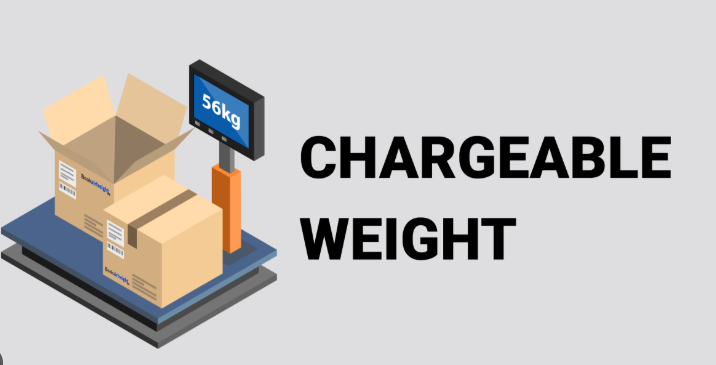
Not necessarily. Chargeable weight is what the carrier bills you for, and it is usually:
- The higher of actual weight and volumetric weight
That single rule explains most "why is this so expensive?" moments.
2.2 What is volumetric weight shipping in plain English?
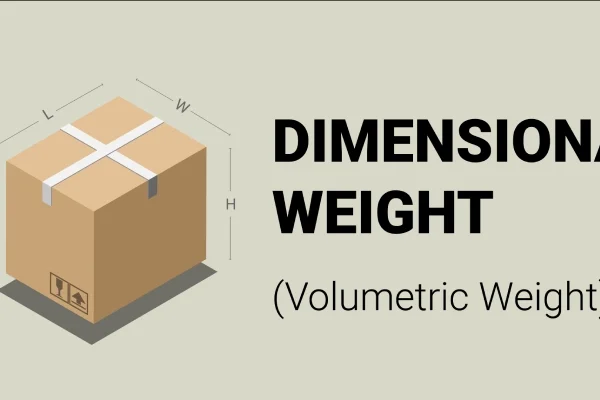
Volumetric weight shipping means your parcel is billed by the space it occupies, not just its mass. The carrier calculates:
- Length × Width × Height ÷ Dimensional Factor
Different carriers and service lanes use different dimensional factors. The factor is essentially the carrier's "space pricing rule." You don't need to memorize the exact number to avoid traps, but you do need to understand how to reduce the volume.
3. Why does a big box with a small item become a volume-weight trap?
3.1 What are the most common trap scenarios?
In real buying and forwarding workflows, volume weight traps happen when:
- A seller uses an oversized carton for speed
- Protective packaging is added without compressing the air space
- Multiple small items ship in separate large boxes
- A fragile item is double-boxed when a better inner pack would work
- The outer box is tall because of a bad arrangement
The "trap" is not the item. It's the box.
3.2 Why do light items suffer more from volumetric weight shipping?
Because once the parcel is mostly air, the actual weight becomes irrelevant. A heavy product "earns" its space. A light product in an oversized carton doesn't. So volumetric weight becomes the driver, and the quote feels disconnected from reality.
4. How are shipping costs calculated step-by-step?

4.1 What is the practical calculation flow that carriers follow?
When I audit a shipment quote, I think in this order:
- Determine route and service type (economy vs faster lanes)
- Measure parcel dimensions (outer box, not inner items)
- Weigh the parcel (actual weight)
- Compute volumetric weight using the lane's dimensional factor
- Set chargeable weight = the higher of actual vs volumetric
- Apply handling rules (fragile, special items, restricted categories)
- Add service operations (repack, photos, labels, consolidation)
- Confirm delivery scope (last-mile network and tracking events)
If you understand that flow, you can predict costs before you commit.
4.2 What should you measure: the product or the box?
Always measure the final shipping box. Many buyers plan based on product size, then get shocked when the seller's outer carton is much larger than expected. With volumetric weight shipping, the outer carton is what counts.
5. What factors increase volumetric weight even when you didn't "buy more"?
5.1 Packaging behavior from sellers
Sellers optimize for speed and low damage rates, not for your volumetric weight shipping bill. Common patterns:
- "One size fits all" cartons
- Big bubble wrap bundles
- Foam corners that increase height
- Retail boxes are shipped inside larger cartons
This isn't malicious. It's operational convenience.
5.2 Consolidation choices that create a bigger box
Consolidation can reduce total shipments, but it can also create a new volume trap if:
- Items are not arranged tightly
- A large outer box is used "just to be safe."
- One odd-shaped item forces a larger carton for everything
A good consolidation process should present options, not lock you into a single result.
6. How can you avoid volume-weight traps before shipping?

6.1 Can repacking actually reduce shipping costs?
Yes, and it's often the fastest win. The goal is to reduce air space while maintaining appropriate protection. The simplest actions are:
- Ask for compact packing for soft goods
- Remove unnecessary retail boxes when safe
- Use a lower-profile outer carton
- Use inner protection that doesn't add height
- Keep fragile items protected but not "inflated."
When I'm shipping clothes, I usually choose compression. When I'm shipping ceramics or glass, I prioritize protection and accept a bit more volume.
6.2 Should you split one oversized parcel into two smaller ones?
Sometimes, yes. The counterintuitive truth: two smaller boxes can produce a lower total volumetric weight than one oversized box. This usually happens when:
- One item forces a tall box
- The combined box becomes "dimensionally heavy."
- Carrier rounding rules punish the larger box
The right choice depends on shape, not just count.
7. What are "rounding rules," and why do they matter?
7.1 Do carriers round dimensions or weights?
Many carriers round up in ways that seem small but add up:
- Rounding each dimension up to the next whole unit
- Rounding chargeable weight to the next billing step
So even shaving a little off a box's height can change the billing bracket. That's another reason volumetric weight shipping feels harsh: it's based on box geometry.
7.2 How do you protect yourself from rounding surprises?
My approach:
- Aim to reduce the largest dimension first
- Avoid tall cartons when the width can be increased slightly
- Choose packing that keeps items flat
- Repack to remove "empty ceilings" in the box
8. Are there regional differences in volumetric weight shipping?

8.1 Do different routes use different dimensional factors?
Yes. Carriers and lanes can use different factors based on:
- Aircraft vs ground-heavy networks
- Capacity availability
- Seasonal space pressure
- Risk and exception rates on the lane
That's why the same box can be priced differently across methods.
8.2 Why can the same brand feel different across markets?
Even if you ship similar items, cost behavior changes when:
- A route has stricter restrictions
- Customs inspection rates are higher
- Tracking networks are weaker (more exception handling)
- Handoffs are more frequent
Those factors influence the service and risk bundle baked into the quote.
9. A buyer's checklist: estimate shipping before you pay
9.1 What should you check on the product side?
Before you buy, I check:
- Is the item bulky relative to its weight?
- Does it ship in a retail box that adds volume?
- Can it be safely repacked?
- Are there restricted components (battery, liquid, magnet)?
This is the fastest way to avoid a future volume-weight shipping shock.
9.2 What should you check on the forwarding side?
Before confirming shipment, I verify:
- Final box dimensions after repack/consolidation
- Actual vs volumetric weight outcome
- Whether splitting parcels reduces volumetric weight
- Tracking quality on the route
- Service options (photos, QC, labels) only if needed
When you treat shipping as a workflow, you stop paying "surprise tax."
10. How KongfuMall helps buyers avoid volume weight traps
10.1 Can one platform manage buying + forwarding with clear steps?
If you source from Chinese platforms, the simplest way to avoid surprises is to keep purchasing and forwarding within a single workflow. KongfuMall helps global buyers purchase from China and forward parcels worldwide while keeping key information connected:
- Agent purchasing support across major Chinese platforms
- Warehouse receiving, scan-in, and parcel forwarding
- Consolidation and repack requests to reduce air space
- Add-on services like photos and basic quality checks
- DIY online ordering and flexible payment options
When the buying and warehouse sides share the same order context, it becomes easier to predict volumetric-weighted shipping outcomes.
10.2 What I care about most as a buyer
When I'm trying to control volumetric weight shipping, I focus on:
- Quick warehouse intake and accurate measurements
- Clear repack options and realistic parcel dimensions
- Consolidation that avoids oversized cartons
- Tracking that doesn't go silent for long stretches
Those small operational details are what prevent volume weight traps.
11. FAQs: quick answers about volumetric weight shipping
11.1 Why is my parcel "light" but billed like it's heavy?
Because volumetric weight shipping bills space. A large carton creates a high volumetric weight, and the carrier charges accordingly.
11.2 Can compact packing really change my chargeable weight?
Yes. If compact packing reduces the box dimensions enough, the volumetric weight drops, and the chargeable weight can revert to the actual weight.
11.3 Is consolidation always cheaper?
Not always. Consolidation can result in oversized cartons and increase volumetric weight. It works best when items pack efficiently and don't force tall boxes.
11.4 Should I remove retail boxes?
Suppose it's safe, yes. Retail packaging often adds volume without adding protection. For fragile items, keep protective packaging but avoid unnecessary outer cartons.
11.5 How do I avoid volumetric weight traps consistently?
Treat it like a routine:
- Estimate volume before buying
- Use repack options when needed
- Reduce the largest dimension first
- Split parcels when one item forces a huge box
- Confirm final measurements before paying
Conclusion
Volumetric weight shipping is the core reason shipping costs can jump even when your item is light. Once you understand chargeable weight, packaging geometry, rounding rules, and when to repack or split, you can avoid most volume weight traps before they happen.
If you want a single workflow to buy from Chinese platforms and forward parcels worldwide with clear steps and flexible services, you can use KongfuMall: https://www.KongfuMall.com.