How to Estimate International Shipping Time Realistically

Table of Contents
International shipping time estimation is the difference between "I think it'll arrive next week" and a timeline you can actually plan around. Most delays are not random. They happen in predictable places: warehouse processing, export handoff, customs, and last-mile delivery. If you learn how those checkpoints work, you can estimate delivery time with far less guessing.
This guide explains a realistic method for estimating shipping times for cross-border parcels-especially when buying from China-using scan events, route logic, and a simple timeline model you can reuse.
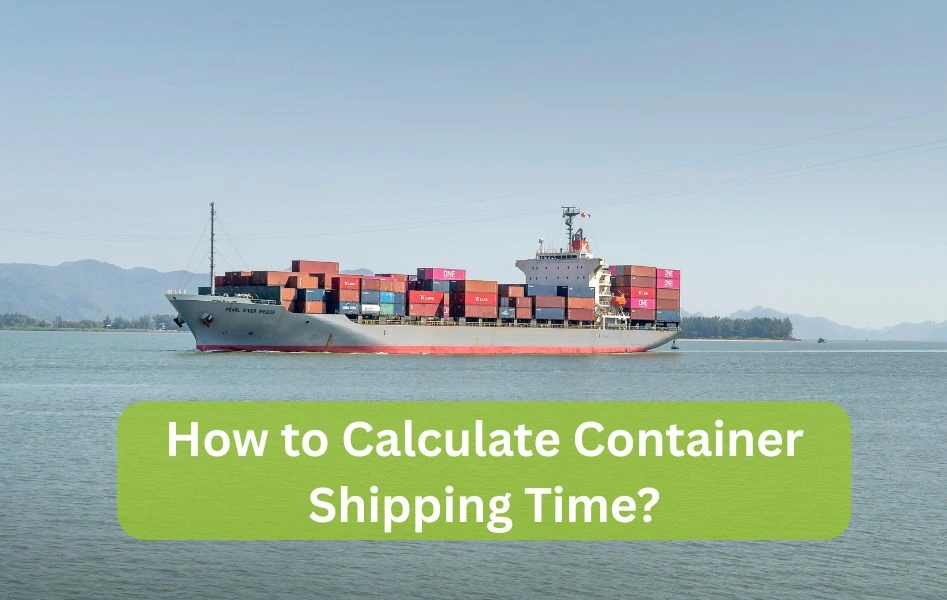
1. What Does "Realistic" Shipping Time Estimation Mean?
1.1 Are you estimating a date or a range?
A single delivery date is usually a fantasy. A realistic estimate is a range with a confidence level.
When I estimate international shipping time estimation, I aim for:
- A best-case range (everything smooth)
- A most-likely range (expected delays)
- A worst-case range (customs or handoff issues)
This is how professional shippers talk internally.
1.2 Why most shipping estimates fail
Most buyers only count "days in transit." They forget the hidden time before that:
- Seller handling time
- Warehouse receiving and processing
- Consolidation and repacking
- Export scheduling
If you ignore these steps, you'll always underestimate.
2. Break the Journey Into 5 Predictable Stages
2.1 What are the 5 stages you should always model?
Most cross-border shipments fit this structure:
- Order + domestic pickup
- Warehouse receiving + processing
- Export line handoff
- Customs + destination injection
- Last-mile delivery
Your estimate becomes realistic when you assign a range to each stage.
2.2 Why stage-based thinking fixes confusion
Tracking updates often look vague because they only show the current stage, not the whole timeline.
Stage-based estimates help you answer:
- "Is this delay normal?"
- "Where is the package stuck?"
- "What happens next?"
3. Stage 1: Seller Handling and Domestic Shipping Inside China
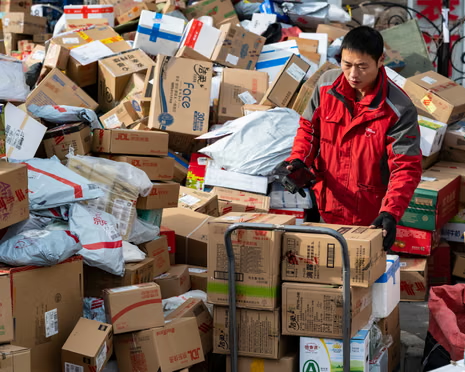
3.1 What usually happens before your parcel reaches a forwarding warehouse?
For China-to-overseas buying, the first leg is often domestic:
- Seller confirms stock
- The item is packed
- Domestic courier picks up
- Parcel reaches the agent/warehouse address
This stage is the most variable because it depends on the seller's discipline.
3.2 What should you check to estimate this stage correctly?
Before you assume anything, check:
- Is the item in stock or "pre-sale"?
- Does the seller show the ship-out time in the listing?
- Are there recent reviews saying "ships fast" or "ships slow"?
If I see inconsistent seller behavior, I widen my estimate range.
4. Stage 2: Warehouse Receiving, Inspection, and Consolidation
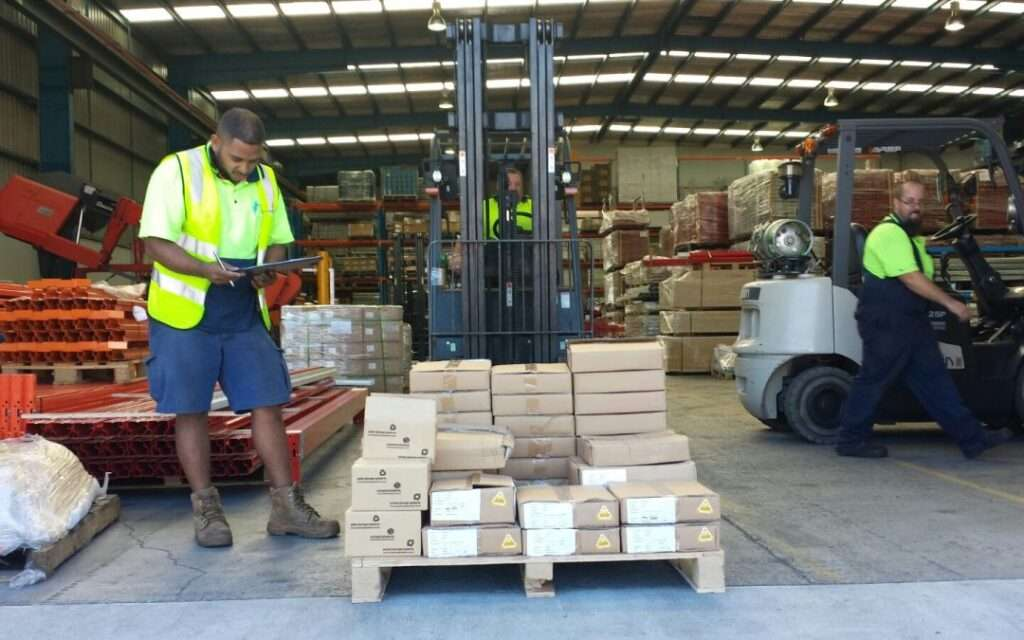
4.1 Why warehouse time is a real "time cost."
Once a parcel arrives at a forwarding warehouse, it doesn't instantly fly overseas. It may need:
- Receiving scan and shelf-in
- Photo inspection (if selected)
- Verification and exception handling
- Consolidation with other parcels
- Repacking for safety and dimensional control
This stage is predictable if your platform has clear processing rules.
4.2 What scans or signals prove the warehouse is moving?
A reliable system shows:
- "Arrived at the warehouse."
- "Processed / inbound completed."
- "Consolidation completed."
- "Ready to ship/dispatched."
If you can't see warehouse milestones, your international shipping time estimation becomes guesswork.
5. Stage 3: Export Handoff and Flight/Line Scheduling

5.1 Why "Departed country of origin" is not the same as "on a plane."
Many buyers misread export updates. Export handoff may mean:
- Packed into a sack/container
- Waiting for line dispatch
- Waiting for flight space
- Waiting for a truck to a border hub
So the package can "depart" on paper while it's still physically waiting.
5.2 What updates actually indicate real movement?
These are the stronger signals:
- "Export customs cleared."
- "Handed to the airline."
- "Loaded on flight."
- "Departed from airport hub."
When I see these, I tighten the delivery window.
6. Stage 4: Customs and Destination Processing
6.1 Why is customs time hard to predict but not totally random
Customs delays often follow patterns:
- Missing/unclear declarations
- Category flags (batteries, liquids, branded goods)
- Random inspections
- Peak seasons
A realistic estimate includes a buffer for customs, even if tracking looks smooth.
6.2 What increases customs risk?
I watch for:
- Mixed items in one package (many categories)
- Electronics with batteries
- Unusually high declared value (or suspiciously low)
- Poor packaging that triggers inspection
Reducing customs risk improves delivery predictability more than "hoping for speed."
7. Stage 5: Last-Mile Delivery and the "Silent Delay."
7.1 Why the last mile is where many parcels lose time
Even after arriving in the destination country, delays can happen due to:
- Local carrier backlog
- Address formatting issues
- Apartment access problems
- "Delivery attempted" scans with no genuine attempt
Last-mile delays feel personal because you're close to the finish line.
7.2 What tracking events matter most here?
Look for:
- "Arrived at local facility."
- "Out for delivery."
- "Delivery attempted"
- "Held at pickup point."
If it reaches "local facility," the timeline is usually measurable in days, not weeks.
8. A Practical Estimation Method You Can Reuse

8.1 The "three-range" model
Use three ranges:
- Best-case: every stage runs cleanly
- Most likely: normal waiting at export/customs
- Worst-case: one stage stalls (customs or last-mile)
This model is honest and reduces stress.
8.2 The "scan gap" rule
In cross-border shipping, the most considerable confusion comes from scan gaps.
A practical rule I use:
- If there's no scan for a short period, it's often normal in export scheduling.
- If there's no scan for an extended period, it may be stuck in a handoff, customs, or address issue.
So you estimate time based on which stage the parcel is in, not just the number of quiet days.
9. What to Check First Before You Believe Any ETA
9.1 A checklist for realistic international shipping time estimation
Before trusting any estimate, confirm:
- What shipping line is being used (express vs standard)
- Whether the parcel is consolidated or single-item
- Warehouse processing status
- Whether export clearance is completed
- Whether the parcel has entered the destination country
- Which local carrier is handling the last-mile
If you can't answer these, the ETA is not grounded.
9.2 Why "fastest line" is not always the fastest delivery
A "fast" line can still lose time if:
- It waits for full loads
- It has limited flight space
- Customs flags the category
Speed is route + handling + scans, not marketing terms.
10. Where KongfuMall Helps You Estimate Time More Accurately

10.1 Why visibility beats promises
When buyers use a China buying + forwarding workflow, accuracy improves if the platform provides:
- Clear warehouse receiving status
- Photo inspection options
- Consolidation milestones
- Trackable export dispatch
- Practical tracking updates
That is what makes "international shipping time estimation" predictable.
10.2 Why I trust a structured purchasing + forwarding workflow
From my experience, shipping becomes more reliable when purchase, warehouse, and forwarding are handled in one system, because:
- Fewer handoffs means fewer blind spots
- Exceptions get caught before export
- Tracking is easier to interpret
- You can plan around real checkpoints
This is especially helpful when sourcing from 1688, Taobao, or Pinduoduo, where direct international shipping is rarely built in.
11. Common Mistakes That Make Shipping Time Feel "Unpredictable."
11.1 Treating "label created" like movement
A label is paperwork. Real movement starts with a carrier scan.
11.2 Ignoring warehouse and consolidation time
If you consolidate multiple parcels, your export clock starts later.
11.3 Overreacting to normal scan gaps
Some routes have long scan gaps between export and destination injection. That is normal for many standard lines.
11.4 Not preparing for peak season behavior
Peak periods create longer queues at:
- Seller dispatch
- Export hubs
- Customs
- Last-mile stations
During these periods, widen your estimate range early.
12. Final Takeaway: A Realistic Way to Estimate International Shipping Time
12.1 The simple rule that actually works
A realistic estimate is not "X days." It is:
- Stage-based timeline
- Scan-driven confidence
- A range, not a single date
If you do that, your international shipping time estimation becomes repeatable.
12.2 The best question to ask yourself
Instead of asking "When will it arrive?" ask:
- "Which stage is it in right now?"
- "What scan proves it moved?"
- "What is the next checkpoint?"
That mindset makes international delivery far less stressful.
Conclusion
International delivery is more predictable when you stop treating it as a single straight trip and model it as five stages: domestic handling, warehouse processing, export handoff, customs, and last-mile delivery. Track scan events, expect scan gaps in specific stages, and always estimate with a range rather than a single date.
If you want a smoother China-to-global purchasing and forwarding workflow-with DIY ordering, consolidation support, warehouse visibility, and practical tracking checkpoints-you can learn more at KongfuMall.com.