Low-Cost Shipping from China to Worldwide Regions: Air, Sea, or Rail?

Global sourcing has become routine for businesses and individual buyers alike. When products are manufactured in China, the real challenge is no longer finding suppliers, but choosing low-cost shipping from China to worldwide regions without sacrificing reliability or delivery predictability. The decision between air, sea, and rail freight has a direct impact on cash flow, inventory planning, and customer satisfaction.
This article explains how each shipping method works, identifies the situations in which it is best suited, and provides guidance on making informed decisions based on real logistics factors rather than assumptions.
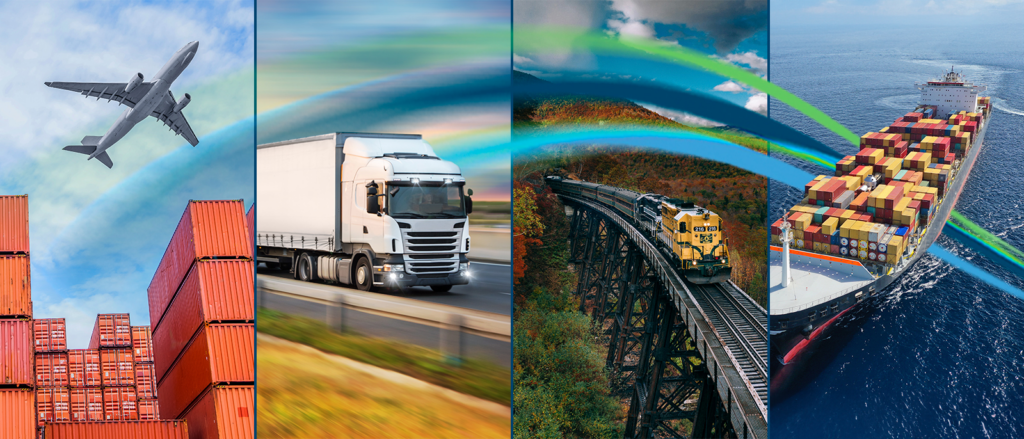
Table of Contents
1. What Does "Low-Cost Shipping from China to Worldwide Regions" Really Mean?
1.1 Is Low-Cost Shipping Only About the Cheapest Option?
Low-cost shipping is often misunderstood as selecting the cheapest visible method. In reality, low-cost shipping from China to worldwide regions focuses on total logistics efficiency.
Key considerations include:
- Transit time and inventory holding pressure
- Stability of delivery schedules
- Risk of delays, congestion, or rerouting
- Flexibility for different shipment sizes
A shipping method that appears cheaper upfront may actually incur higher indirect costs due to delays or operational inefficiencies.
1.2 Why Shipping Method Choice Matters More Than Ever
With global trade routes constantly in flux, selecting the wrong mode can disrupt entire supply chains. The goal is not just saving money, but maintaining control.
Smart shipping decisions:
- Reduce stock shortages
- Improve delivery commitments
- Align logistics with sales cycles
Understanding air, sea, and rail freight individually is the foundation of sustainable, low-cost shipping from China to worldwide regions.
2. Air Freight: Is Speed Worth the Trade-Off?
2.1 When Does Air Freight Make Sense?
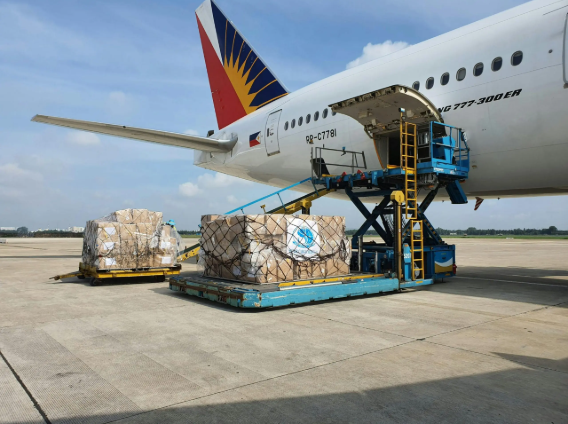
Air freight is the fastest shipping method from China to most global destinations. It is commonly used when time sensitivity outweighs concerns about volume.
Air freight is often chosen for:
- Lightweight and compact goods
- Urgent replenishment orders
- Seasonal or promotional products
- High-value items with tight timelines
From experience, air shipping works best when delays would cause greater losses than higher logistics costs.
2.2 What Are the Practical Limits of Air Freight?
Despite its speed, air freight has structural limitations.
Common constraints include:
- Strict weight and size limits
- Capacity fluctuations during peak seasons
- Higher environmental impact
Air freight supports low-cost shipping from China to worldwide regions only under specific conditions. It is a precision tool, not a default solution.
3. Sea Freight: The Backbone of Global Shipping
3.1 Why Sea Freight Dominates Worldwide Shipping
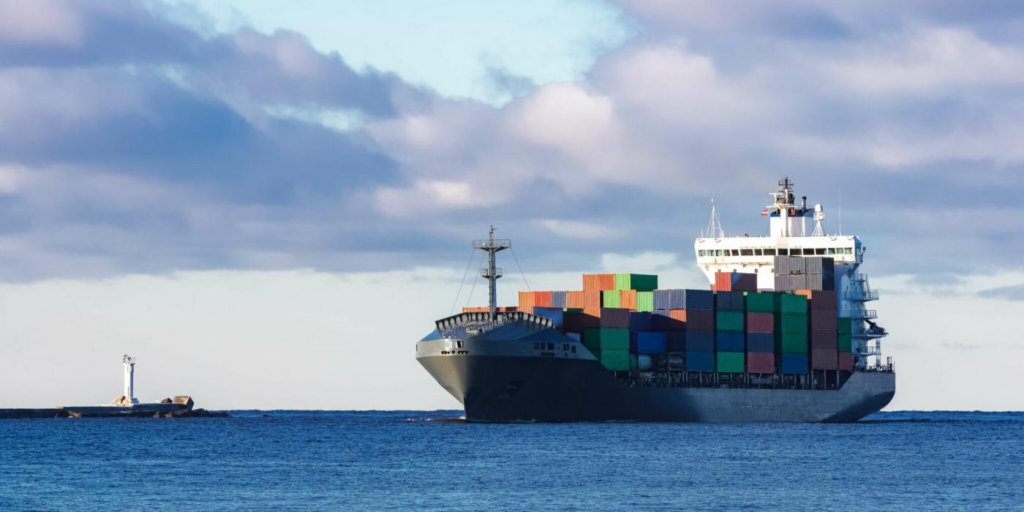
Sea freight remains the most widely used method for international shipping from China. It offers unmatched scalability and cost efficiency for large shipments.
Sea freight is ideal for:
- Bulk goods and large volumes
- Heavy or oversized cargo
- Stable, long-term supply chains
For most businesses, sea freight forms the core of low-cost shipping from China to worldwide regions.
3.2 FCL vs LCL: Which One Fits Better?
Sea freight usually operates under two formats:
- FCL (Full Container Load): One shipper uses the entire container
- LCL (Less Than Container Load): Multiple shipments share container space
FCL offers better control and predictability. LCL improves flexibility for smaller shipments but requires careful consolidation planning.
Choosing between FCL and LCL has a direct impact on delivery reliability and overall shipping efficiency.
3.3 What Are the Hidden Challenges of Sea Freight?
Sea freight is economical, but it comes with risks.
Potential challenges include:
- Port congestion
- Customs inspection delays
- Weather-related disruptions
- Longer transit cycles
Proper documentation and realistic timeline planning are essential to keep sea freight aligned with low-cost shipping from China to worldwide regions.
4. Rail Freight: The Middle Ground Option
4.1 How Rail Shipping Bridges Speed and Cost
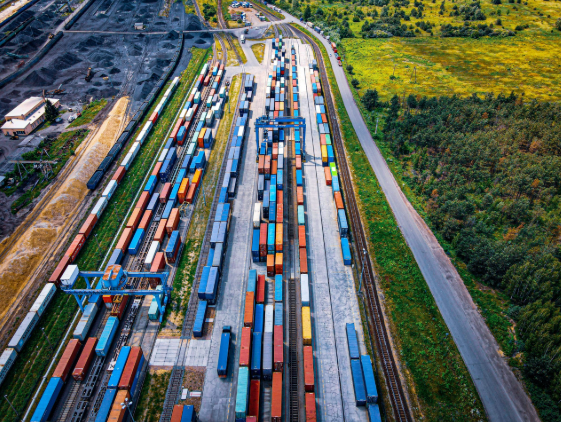
Rail freight has gained popularity on routes connecting China with Europe and parts of Central Asia. It strikes a balance between transit speed and cost efficiency.
Rail freight is often suitable for:
- Medium-sized shipments
- Buyers seeking faster alternatives to sea freight
- Stable overland trade corridors
In practice, rail shipping offers a strategic compromise for low-cost shipping from China to regions worldwide where sea transit times are too long.
4.2 Where Rail Freight Works Best
Rail routes are not globally universal. They are strongest along established corridors such as the China–Europe lines.
Rail freight performs well when:
- Infrastructure is mature
- Customs coordination is stable
- Transit distance aligns with rail network design
It is less effective for destinations outside Eurasian land routes.
5. How to Choose the Right Shipping Method?
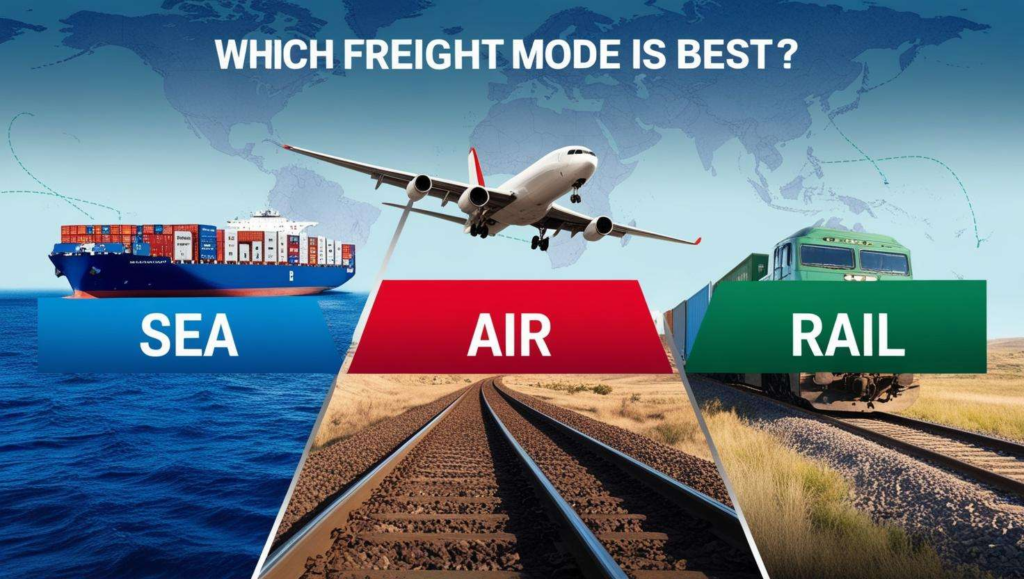
5.1 Should Shipment Size Decide Everything?
Shipment size is essential, but it should not be the only factor.
Other decision drivers include:
- Delivery urgency
- Destination infrastructure
- Product handling requirements
- Supply chain flexibility
Low-cost shipping from China to worldwide regions requires matching the shipping mode with the overall logistics strategy.
5.2 How Do Destination Regions Affect Shipping Choices?
Different regions respond differently to shipping methods.
For example:
- North America often favors sea and air combinations
- Europe benefits from sea and rail integration
- Emerging markets may face port or customs variability
Understanding regional logistics realities helps prevent costly misalignment.
6. How Can Logistics Planning Reduce Overall Shipping Costs?
6.1 Why Timing and Consolidation Matter
Strategic consolidation reduces wasted space and inefficient handling.
Effective planning focuses on:
- Shipment batching
- Predictable reorder cycles
- Optimized packaging dimensions
These practices strengthen low-cost shipping from China to worldwide regions without sacrificing delivery reliability.
6.2 What Role Does Documentation Play?
Incomplete or inaccurate documentation is a leading cause of delays.
Key documents typically include:
- Commercial invoices
- Packing lists
- Shipping instructions
Accurate paperwork ensures smoother customs clearance and reduces unexpected disruptions.
7. Common Misconceptions About Low-Cost Shipping

7.1 Is Slower Always Cheaper?
Slower shipping does not automatically result in lower costs. Delays can increase storage requirements, disrupt sales schedules, and lead to additional downstream expenses.
Actual low-cost shipping from China to worldwide regions strikes a balance between speed, predictability, and operational efficiency.
7.2 Can One Shipping Method Fit All Scenarios?
No single method works for every shipment. Many successful logistics strategies combine multiple modes over time. Flexibility remains the most valuable asset in global shipping decisions.
8. How Platforms Simplify Global Shipping Decisions
Managing international shipping independently can be a complex process. Platforms that integrate sourcing, consolidation, and shipping coordination help simplify decision-making.
KongfuMall typically supports:
- Multiple shipping methods
- Transparent process coordination
- Centralized logistics management
This structure reduces friction when managing low-cost shipping from China to worldwide regions at scale.
Conclusion
Choosing between air, sea, and rail shipping is not about finding a universal winner; it's about finding the best option for your specific needs. Each method serves a distinct purpose within a broader logistics strategy. Low-cost shipping from China to worldwide regions depends on understanding shipment needs, destination constraints, and long-term planning goals.
When shipping decisions are made based on fundamental operational factors rather than assumptions, global logistics becomes predictable, scalable, and cost-efficient.
For businesses and buyers seeking a structured way to manage sourcing, consolidation, and worldwide shipping coordination, platforms like KongfuMall help streamline the process across multiple shipping methods and destinations. Learn more at KongfuMall.com.