How KongfuMall Fits Into the Modern Chinese Shopping Ecosystem (Buyer View)

Chinese Shopping is not a single "store." It is a connected ecosystem where discovery, trust, and purchasing happen across different places. From a global buyer's perspective, the challenge is rarely "Can I find the item?" The real challenge is "Can I actually complete the purchase and receive the exact item I meant to buy?"
KongfuMall fits into this ecosystem as a bridge for buyers outside China who want access to what is available inside mainland China, without needing to behave like a local user on every platform.

What does the modern Chinese Shopping ecosystem look like?
Why doesn't it feel like one marketplace?
In many countries, shopping starts and ends on one site. In Chinese Shopping, the journey often moves across layers:
- Discovery layer: short video, live streams, community posts, and creator recommendations
- Transaction layer: marketplaces, brand stores, and seller storefronts
- Fulfillment layer: domestic shipping networks built around mainland addresses and local service habits
- Access layer: account rules, verification steps, and payment expectations designed for domestic users
As a buyer, I experience this as a "multi-stop path." It can be fast and fun, but it can also feel fragmented when you are outside the mainland.
Why do so many shopping paths exist at the same time?
The ecosystem supports different buying motivations:
- Trend chasing: you see it in content and want it immediately
- Practical purchasing: you search, compare, and choose the best match
- Sourcing mindset: you want factory-style options, variations, and supply depth
- Brand-first shopping: you want official presentation and consistent standards
This variety is a strength of Chinese Shopping, but it also explains why the rules and habits are not the same everywhere.
Why does Chinese Shopping feel "easy for locals, hard for foreigners"?
Why is discovery sometimes more important than search?
A lot of products get validated through people, not just product pages. That means I often see a product first, then I confirm it through:
- comments and buyer photos
- community discussions
- repeated mentions across different posts
- short demos that show real usage
If you come from a search-first shopping culture, this content-driven flow can feel unfamiliar, even though it works well inside the ecosystem.
Why do listing styles look inconsistent?
Different seller types present products in different ways. As a buyer, I notice huge variation in:
- naming conventions (short names, nicknames, local shorthand)
- variant logic (bundles, add-ons, "choose one" lists)
- spec formatting (some are detailed, some are minimal)
- photo quality and what is shown vs. what is assumed
So the buyer skill is not only "pick a product," but also "interpret the listing correctly."
What stops overseas buyers from completing purchases?

Why do accounts and verification create friction?
Many platforms are designed around domestic user assumptions. For global buyers, common blockers include:
- phone verification patterns that don't match overseas numbers
- identity steps that expect local documents or local workflows
- customer service flows that assume you are in the same time zone and language context
Even when browsing is easy, checkout can become the point where Chinese Shopping stops being accessible.
Why does shipping feel simple inside China but complex across borders?
Domestic delivery is optimized for mainland addresses and domestic handoffs. Cross-border delivery adds new constraints:
- different address formats
- international handoff steps
- different tracking expectations
- different after-sales habits
For a buyer outside China, the gap is clear: the product is available, but the seller is not set up to serve my location directly.

Why can "the wrong variant" be a bigger risk?
In Chinese Shopping, many products have many variants. Two items can look similar but differ in details that matter:
- material version
- size standard
- accessory bundle
- updated batch vs. older batch
- compatibility or regional differences
As a buyer, I don't only want the item. I want the right version of the item.
Where does KongfuMall fit without changing the ecosystem?
What is the "buyer bridge" role in Chinese Shopping?
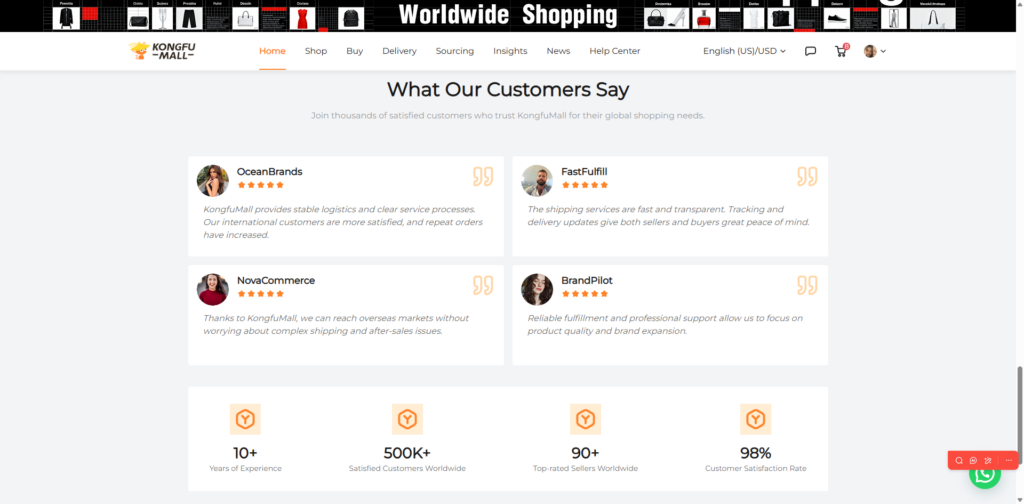
KongfuMall fits as the layer that turns mainland availability into a completed purchase for global buyers. The ecosystem already has the selection, speed, and variety. What overseas buyers often need is a reliable way to participate in that ecosystem without being blocked by domestic-only assumptions.
From my side, that means I can focus on choosing what I want, while using a consistent path to get it purchased from within mainland China.
Why does "one relationship" matter when there are many platforms?
If I shop across multiple Chinese platforms, I don't want to maintain multiple sets of:
- account rules
- checkout habits
- seller communication styles
- platform-specific edge cases
In a multi-platform world, having one stable purchasing path makes Chinese Shopping feel manageable. It reduces the mental load while keeping access wide.
Can it cover "everything you can buy in mainland China"?
From a buyer standpoint, the practical promise is simple:
- If it is legitimately purchasable within mainland China across mainstream platforms and seller channels, it can be purchased on my behalf.
This matters because Chinese Shopping is not limited to one site. The ecosystem includes a wide range of platforms, categories, and seller types, and global buyers often want access to that full mainland assortment.
How do I shop smarter inside Chinese Shopping?
What questions should I ask before I commit?
When I treat Chinese Shopping like an ecosystem, I reduce mistakes with a short checklist:
- What is my must-match spec? (model, material, size, compatibility)
- What is the seller type? (brand store, reseller, small merchant, factory-style channel)
- What proves real-world use? (buyer photos, comments, demos)
- What is the variant trap? (bundles, add-ons, hidden options)
- What will I regret if I get it wrong? (hard-to-correct items)
What habits prevent "looks right, buys wrong"?
These habits help me buy the correct item:
- Screenshot the variant I intend to buy and the key spec lines
- Compare the same item across multiple listings to see what is consistent
- Watch for unit differences, size standards, and bundle wording
- Prefer listings that show the variant clearly in both text and images
This is a realistic way to shop in Chinese Shopping because it acknowledges how dense and fast-moving listings can be.
Summary: What KongfuMall represents in the Chinese Shopping ecosystem
Chinese Shopping works as an ecosystem: content drives discovery, platforms host transactions, and domestic logistics make fulfillment fast inside China. For global buyers, the main obstacles are access and completion, not product availability.
KongfuMall fits into that reality as a buyer-side bridge, helping global shoppers purchase what is available within mainland China across many platforms, without needing to become an expert in every platform's local assumptions.
Visit: https://www.KongfuMall.com