Is Chinese Shopping Reliable? A Clear Breakdown of Costs and After-Sales

Table of Contents
Is Chinese shopping reliable? It can be-if you understand what "reliable" really means in a China-to-overseas purchase. Reliability is not only about getting a package. It's about predictable costs, traceable logistics, verified items, and workable after-sales when something goes wrong.
This guide explains how Chinese shopping works for overseas buyers, where costs actually come from, how after-sales service is handled in real life, and what you should check before you place an order.
1. What Does "Reliable" Mean in Chinese Shopping?
1.1 Are you judging reliability by delivery or by control?
Most people call Chinese shopping "unreliable" when they lose control. That usually happens when:
- Costs show up late
- Tracking is unclear
- The item received does not match the listing
- Returns feel impossible
- Support replies too slowly
So, for overseas buyers, Chinese shopping is a reliable means: the process is transparent enough that you can make decisions early, not after it's too late.
1.2 Why reliability depends on structure, not luck
China's domestic platforms are built for domestic users. Overseas buyers face extra layers:
- A Chinese receiving address is required
- Domestic returns need local handling
- Sellers communicate in Chinese
- International shipping is not built into most platforms
That's why "reliability" comes from using a proper purchasing and forwarding workflow.
2. How Chinese Shopping Actually Works for Overseas Buyers
2.1 What are the common China shopping routes?
Overseas buyers usually follow one of these routes:
- Direct purchase (limited and often not supported)
- Friend or family in China (works, but not scalable)
- Buying agent + forwarding (most reliable long-term option)
If you want stable sourcing from 1688, Taobao, or Pinduoduo, a structured agent workflow is usually the most repeatable path.
2.2 Why 1688, Taobao, and Pinduoduo matter
These three platforms cover different needs:
- 1688: factory and wholesale supply
- Taobao: broad retail selection
- Pinduoduo: domestic deals and high-volume listings
The challenge is that none of them are designed for international checkout and after-sales. That is where a reliable intermediary becomes essential.
3. A Clear Breakdown of Costs in Chinese Shopping
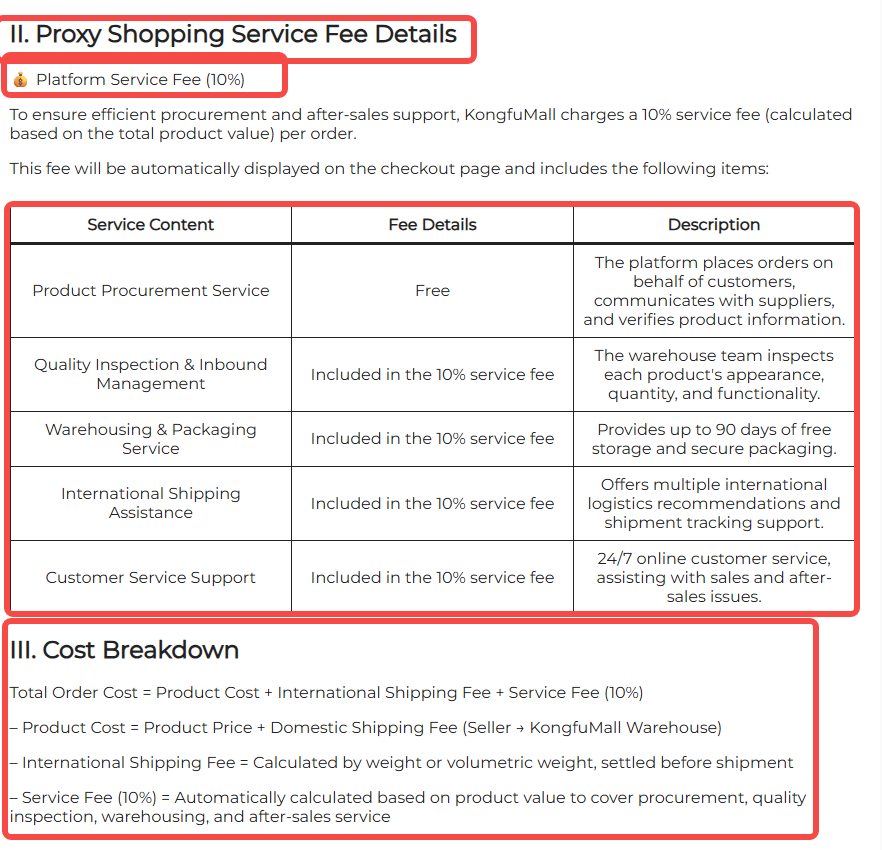
3.1 Why "cost" is not one number
Overseas buyers often compare a listing number to an international store price and assume the difference is "profit." In reality, the total cost includes multiple steps.
A reliable breakdown usually involves:
- Domestic purchase handling
- Warehouse receiving and processing
- Optional inspection services
- Consolidation and repacking
- International forwarding
- Potential after-sales handling
The goal is not "cheapest." The goal is predictable and transparent.
3.2 Which costs should be visible before you ship?
Before you ship internationally, a platform should let you confirm:
- Package weight and dimensions (or an estimated range)
- Consolidation options and rules
- Shipping fee calculation logic
- Any special handling requirements
If you can't see these early, you can't control the total cost.
3.3 What "transparent costs" should look like
When I say transparent, I mean you should be able to:
- See a transparent fee structure
- Use a shipping fee calculator
- Understand what triggers extra handling
- Avoid surprise charges at the last step
"Transparent" should be a system feature, not a promise in customer support chat.
4. The Reliability Traps: Where Overseas Buyers Get Burned
4.1 Why product listings can cause a mismatch
A common reliability failure is expectation mismatch. Many listings may show:
- Usage scenario photos instead of the delivered item
- Partial bundles or component-only options
- Unassembled or raw materials
Before buying, verify:
- Exact item contents
- Size and material details
- Whether accessories are included
This single habit reduces most disputes.
4.2 Why tracking often feels confusing
International shipping usually has handoffs:
- Domestic carrier to the warehouse
- Warehouse to export line
- Export to destination processing
- Local last-mile delivery
If tracking shows only "processing" statuses, you lose confidence in the system. Reliable tracking should show real scan events.
4.3 Why support speed affects reliability more than people think
When a problem happens, time matters. Slow responses create:
- Missed return windows
- Delayed reshipments
- Stuck parcels
- Unclear responsibility
A reliable workflow includes fast support and a clear escalation path.
5. After-Sales Reality: What Works and What Doesn't

5.1 Can overseas buyers return items?
Technically, yes, but practically, it depends on the structure.
Most Chinese sellers require:
- A Chinese domestic return address
- Chinese communication
- Platform-based dispute steps
If you are overseas, you need someone on the ground to manage this.
5.2 What after-sales issues happen most often?
The most common cases are:
- Wrong size or color
- Missing accessories
- Minor defects
- Listing mismatch (bundle vs single component)
- Shipping damage (rare, but possible)
The best solution is to reduce risk before international shipping through inspection and verification.
5.3 What is the most realistic after-sales strategy?
A practical after-sales strategy is built on three layers:
- Prevent: verify listings, choose stable sellers
- Detect early: photo inspection at the warehouse
- Handle locally: returns, exchanges, and relabeling support
After-sales becomes manageable when handled in China before the parcel leaves.
6. What to Check First: A Reliability Checklist
6.1 A 12-point checklist you can reuse
Use this checklist before your first order:
- Can the platform buy from 1688/Taobao/Pinduoduo?
- Can you submit links with DIY ordering?
- Is the warehouse receiving visible and documented?
- Are photo inspection options available?
- Can you request a basic inspection report?
- Can you consolidate packages with one click?
- Are repacking rules clear?
- Is tracking based on real carrier events?
- Is there a shipping fee calculator?
- Are after-sales rules written clearly?
- Does support respond quickly after payment?
- Can the platform handle relabeling and returns?
If several answers are unclear, reliability will be weak.
7. Why Buying Agents Make Chinese Shopping More Reliable
7.1 What a buying agent actually solves
A professional agent acts as:
- Domestic buyer
- Payment intermediary
- Warehouse and inspection coordinator
- Logistics planner
- After-sales handler
This is why Chinese shopping reliability becomes possible for overseas buyers.
7.2 Why reliability improves when you centralize steps
When purchase, inspection, consolidation, and shipping are managed in one system:
- You get fewer handoffs
- You reduce miscommunication
- You control cost before shipping
- After-sales becomes realistic
8. Who Is Chinese Shopping Best For?

8.1 Personal buyers
If you're buying personal items, reliability improves when you use:
- Photo inspection
- Consolidation
- Clear tracking
- Support that can handle exceptions
8.2 Resellers and sellers
If you restock for marketplaces, reliability depends on:
- Stable 1688 sourcing
- Consistent inspection rules
- Relabeling support
- Bulk consolidation
- Clear shipment tracking for your customers
8.3 Group buyers
Group buying needs:
- Batch ordering support
- Strong warehouse processing
- Fast customer support
- Predictable shipping workflows
9. Final Takeaway: Is Chinese Shopping Reliable?
9.1 The honest answer
Yes-Chinese shopping reliability is achievable when you run the process correctly.
Chinese shopping becomes unreliable when:
- Costs are not transparent
- Inspection is skipped
- Tracking is vague
- After-sales has no China-side handler
It becomes reliable when:
- Costs are explained before shipping
- Items are verified at the warehouse
- Tracking shows real events
- After-sales service is handled locally before export
Conclusion
Chinese shopping can be reliable for overseas buyers, but only when you use a workflow that makes costs transparent and after-sales service possible. If you want stable purchasing from 1688, Taobao, Pinduoduo, and factory sources-plus photo inspection, one-click consolidation, tracking visibility, and precise handling for returns and relabeling-use a platform built for global buyers. Start here: https://www.KongfuMall.com.