Why Designers Use Chinese Shopping Differently Than Resellers

Chinese Shopping plays a very different role depending on who is using it. Designers and resellers often access the same platforms, suppliers, and factories; however, their goals, decision-making processes, and workflows are fundamentally different.
This article explains why designers approach Chinese Shopping as a creative and operational tool, while resellers treat it as a transactional channel. Understanding this difference helps global buyers avoid common mistakes and use Chinese platforms more effectively.
Table of Contents
1. What Does "Chinese Shopping" Really Mean Today?
Shopping in China is no longer limited to bulk sourcing or resale-driven procurement. It now includes:
- Design research and material discovery
- Prototype sourcing and sampling
- Small-batch customization
- Supply chain validation
Designers often enter Chinese Shopping ecosystems to build products, not just move inventory.
Resellers, on the other hand, typically focus on speed, margin, and repeatability.
2. How Do Designers Approach Chinese Shopping Differently?
2.1Why Designers Start With Structure, Not Products
Designers rarely begin with a product list. They start with constraints and intent.
Typical questions include:
- Can this material meet functional requirements?
- Is the production method stable at scale?
- Can variations be controlled consistently?
This mindset changes how Chinese Shopping platforms are used.
Instead of browsing finished goods, designers explore:
- Raw materials
- Semi-finished components
- Manufacturing processes
2.2Why Resellers Focus on Availability and Turnover
Resellers approach Shopping in China with a different priority:
- Is the item already proven?
- Can it be shipped reliably?
- Does the listing match current demand trends?
This often leads to surface-level supplier selection, where speed takes precedence over depth.
3. What Platforms Do Designers Use Inside Shopping in China?
3.1Why Designers Rely on 1688 and Factory-Direct Channels
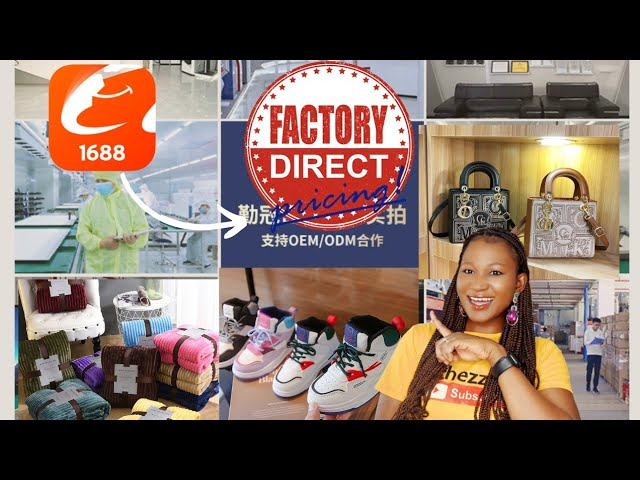
Designers frequently use platforms like 1688 not for finished products, but for:
- Fabric and material sourcing
- Component-level procurement
- OEM and ODM communication
The goal is not to achieve resale-ready packaging, but rather to ensure production feasibility and efficiency.
Designers often interact with suppliers to request:
- Custom specs
- Adjusted finishes
- Small test quantities
This requires language fluency, cultural understanding, and process control.
3.2Why Resellers Prefer Finished-Goods Platforms
Resellers tend to use platforms that provide:
- Pre-packaged SKUs
- Consistent listing formats
- Faster transaction cycles
The shopping experience in China is optimized for efficiency rather than exploration.
4. How Do Designers Evaluate Suppliers in Chinese Shopping?

4.1What Designers Look For Beyond Listings
A supplier listing alone is rarely enough.
Designers evaluate:
- Workshop consistency
- Material sourcing stability
- Communication responsiveness
- Sampling accuracy
In practice, this means verifying real production capability, not just storefront presentation.
4.2Why Sampling Matters More Than Speed
Designers often invest time into:
- Multiple sample rounds
- Process adjustments
- Production testing
Shopping in China becomes a collaborative process, not a one-click transaction.
5. Why Designers Care About Process Transparency
5.1How Process Visibility Reduces Risk
Designers prefer suppliers who can explain:
- Production steps
- Material origin
- Quality checkpoints
This allows better forecasting and reduces downstream issues. Shopping on Chinese platforms enables this, but only when buyers know how to ask the right questions.
5.2Why Resellers Often Skip This Step
Resellers usually prioritize:
- Fast listing turnover
- Immediate availability
- Replicable sourcing
Process depth is often secondary, as long as the product moves.
6. How Chinese Shopping Supports Creative Iteration
6.1Why Iteration Is Central for Designers
Design is rarely linear.
Designers use Chinese Shopping to:
- Test material combinations
- Adjust form factors
- Refine usability
Factories in China are uniquely positioned to support rapid iteration at different stages.
6.2Why Resellers Avoid Iteration
Iteration inherently brings a degree of uncertainty into the process. For resellers, alterations in specifications can heighten risks and disrupt operational efficiency. Consequently, many resellers often gravitate towards stable, fixed designs, seeking a sense of predictability amidst the complexities of an evolving market. This preference not only enables smoother workflows but also minimizes potential setbacks that could arise from frequent changes.
7. How Logistics Strategy Differs Between Designers and Resellers
7.1Why Designers Plan Logistics Early
Designers consider logistics during sourcing:
- Packaging requirements
- Material handling
- Consolidation options
Shopping in China is seamlessly integrated into the broader supply chain strategy, playing a crucial role in enhancing efficiency and connectivity across various stages of the distribution process.
7.2Why Resellers Treat Logistics as a Final Step
Resellers typically take charge of the logistics once sourcing decisions have been established. Their primary emphasis lies on the speed of fulfillment, prioritizing quick delivery times over the optimization of the entire supply chain. This approach often results in a fast-paced distribution process that caters to immediate customer demands, sometimes at the expense of a more strategically refined supply chain management.
8. Where Global Buyers Often Get Chinese Shopping Wrong

8.1Mistaking Reseller Tactics for Designer Workflows
Many global buyers attempt to use Chinese Shopping without defining their role.
Common mistakes include:
- Treating design sourcing like resale sourcing
- Skipping supplier validation
- Ignoring communication barriers
Grasping the nuances between these concepts prevents expensive misalignments and ensures that all parties are on the same page.
8.2Assuming All Platforms Work the Same Way
Each Chinese platform is designed for a specific purpose. Using an inappropriate platform to achieve a particular objective can lead to inefficiency.
9. How We Support Global Buyers Through Chinese Shopping
We work with global buyers who require access to all content available on mainland Chinese platforms.
This includes:
- 1688
- Domestic supplier networks
- Factory-direct sourcing
- Custom and non-standard items
As long as a product can be legally purchased in China, it can be sourced.
Shopping in China becomes manageable when buyers have:
- Local execution
- Clear communication
- Structured purchasing workflows
10. Who Benefits Most From a Structured Chinese Shopping Approach?
Shopping in China is especially effective for:
- Designers building new products
- Brands developing private labels
- Businesses requiring customization
- Buyers needing supplier verification
Resellers may still benefit, but the value multiplies when sourcing goes beyond surface-level listings.
Conclusion
Chinese Shopping is not a single behavior. Designers and resellers utilize the same ecosystem in vastly different ways, driven by distinct goals and risk models.
Understanding these differences enables global buyers to adopt more effective strategies, avoid common pitfalls, and fully leverage the potential of Chinese platforms.
For buyers who require reliable access to all available products across mainland China, structured sourcing makes a significant difference. Learn more at KongfuMall.com.