Looking for a Purchasing Agent in China? The 2026 Guide to Sourcing Success

Let's be honest: If you're still sourcing from China by just clicking "Order" on Alibaba and hoping for the best, you're leaving your business open to massive risk. In 2026, the "low-hanging fruit" of international trade is gone. Rising raw material costs, shifting geopolitical tariffs, and the demand for lightning-fast shipping have made the "middleman maze" more dangerous than ever.
When you start looking for a purchasing agent in China, you'll be bombarded with offers. They all use the same buzzwords: "Best price," "High quality," "Professional service." But behind the screen, they operate on three fundamentally different business models: the Trading Company, the Sourcing Agent, and the Buying Office.
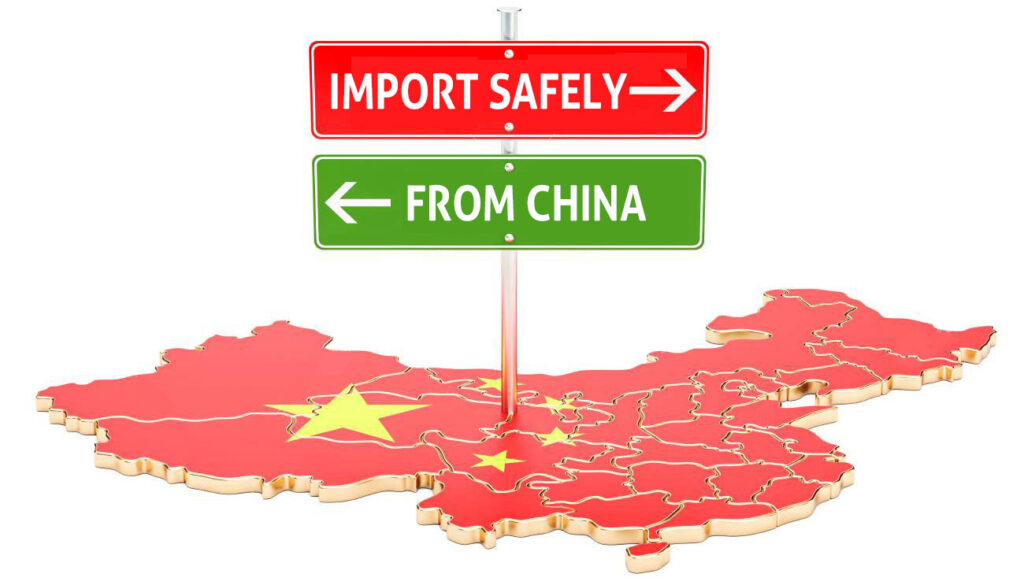
Choosing the wrong one isn't just a minor mistake-it's the difference between a 30% profit margin and a warehouse full of unsellable junk. This guide peels back the curtain on the China sourcing industry to show you who is actually who.
Table of Contents
Why the Right Partner Matters More in 2026
The "China Sourcing" era has shifted. It is no longer about finding the cheapest factory on Alibaba. In 2026, success is defined by:
- Direct Access to Domestic Prices: Buying from 1688.com and Pinduoduo instead of international-facing platforms.
- Speed to Market: Reducing lead times through localized management.
- Quality Consistency: Moving from "inspection" to "quality assurance" at the assembly line.
Choosing the wrong partner leads to hidden markups, "kickback" schemes, and a complete lack of control over your own supply chain.
1. The Trading Company: The "Convenience Store" of Sourcing
A Trading Company is a middleman that buys products from various factories and resells them to international buyers at a profit.
How They Operate
Trading companies often present themselves as factories on Alibaba or Global Sources. They "own" the transaction but do not own the machines. They specialize in a specific niche (e.g., eco-friendly kitchenware) and maintain relationships with dozens of small workshops.
The True Cost of Convenience
When you use a trading company, you are paying a premium for a simplified buying experience.
- Hidden Profit Margins: Their profit is baked into the unit price. You might pay $5.00 for an item that the factory sold for $3.50. This 30% to 50% markup is the cost of not knowing the source.
- Zero Transparency: If a factory raises its prices, the trading company will pass that cost to you (plus their margin) without showing you the original invoice.
When should you choose a Trading Company?
They are ideal for small test orders (under $1,500) or if you need to buy 50 different items in tiny quantities. If you are a beginner not yet ready to scale, the convenience may outweigh the cost.
2. The Sourcing Agent: The Professional "Matchmaker"
A sourcing agent is typically an individual or a small agency that acts as a scout. Their primary goal is to find a factory that meets your specific requirements.
The Role of the Scout
A sourcing agent is perfect when you have a unique or custom product. They spend their time visiting industrial clusters-like the garment districts in Guangzhou or the electronics hubs in Shenzhen-to find the right "fit" for your brand.
The "Double Commission" Trap

While many people looking for a purchasing agent in China start with a freelance sourcing agent, there is a significant risk: The Kickback.
- Scenario: You pay the agent a 5% commission.
- The Reality: The factory also pays the agent a secret 5% "rebate" for bringing them the business.
- The Consequence: The agent will always recommend the factory that pays the highest kickback, not the factory with the best quality or lowest price for you.
Pros and Cons
- Pros: Deep local knowledge; great for "one-off" product development projects.
- Cons: Hard to verify their loyalty; often lacks a physical warehouse for consolidation or QC.
3. The Purchasing Agent (Buying Office): Your Local HQ
A Purchasing Agent (often operating as a professional Buying Office) is a long-term strategic partner. Unlike the other two models, they act as an extension of your company.
The "Open-Book" Philosophy
The defining characteristic of a professional purchasing agent is price transparency.
- Direct Factory Invoices: You see exactly what the factory charges.
- Fixed Service Fee: The agent charges a clear, pre-agreed percentage (usually 5–10%).
- Conflict-Free Interests: Since they don't profit from the unit price, their only goal is to negotiate the lowest price for you to keep you as a long-term client.
The 1688.com Advantage in 2026
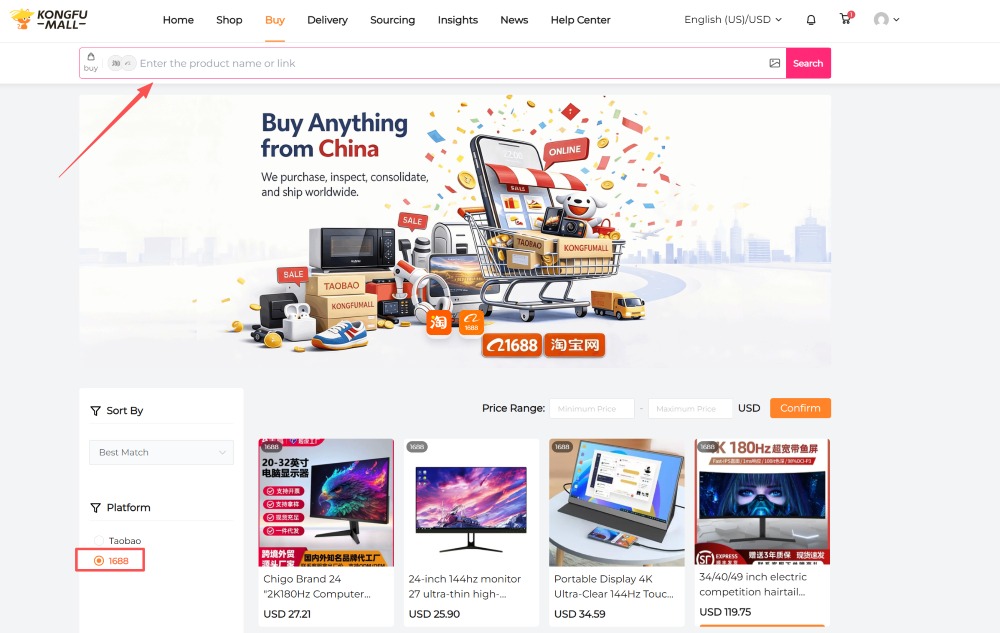
In 2026, the real profits are found on 1688.com (China's domestic wholesale site). Prices here are typically 20% to 30% lower than Alibaba. However, 1688 requires:
- A Chinese bank account or Alipay.
- Communication in Mandarin.
- Domestic Chinese shipping logistics.
We have professional purchasing agents who manage the entire process. You can also directly purchase 1688 products on KongfuMall, giving you access to "China-exclusive" prices that competitors cannot match.
Head-to-Head Comparison: The 2026 Decision Matrix
| Dimension | Trading Company | Sourcing Agent | Purchasing Agent (Buying Office) |
| Business Interest | Sells to you for profit | Connects you for a fee | Works FOR you as an employee |
| Pricing Model | Hidden markup (High) | Commission + potential kickbacks | Factory Price + Service Fee |
| Supply Chain Ownership | ❌ None (They keep the source) | ⚠️ Partial | ✅ Full (You own the factory link) |
| Quality Control | Rare / Managed by factory | Varies (Usually basic) | Strict / Professional Lab Testing |
| Conflict Resolution | Protects the factory | Neutral | Advocates for the Buyer |
| Logistics | Standard shipping | Basic coordination | Advanced Consolidation & FBA Prep |
Deep Dive: How a Professional Agent Protects Your Quality
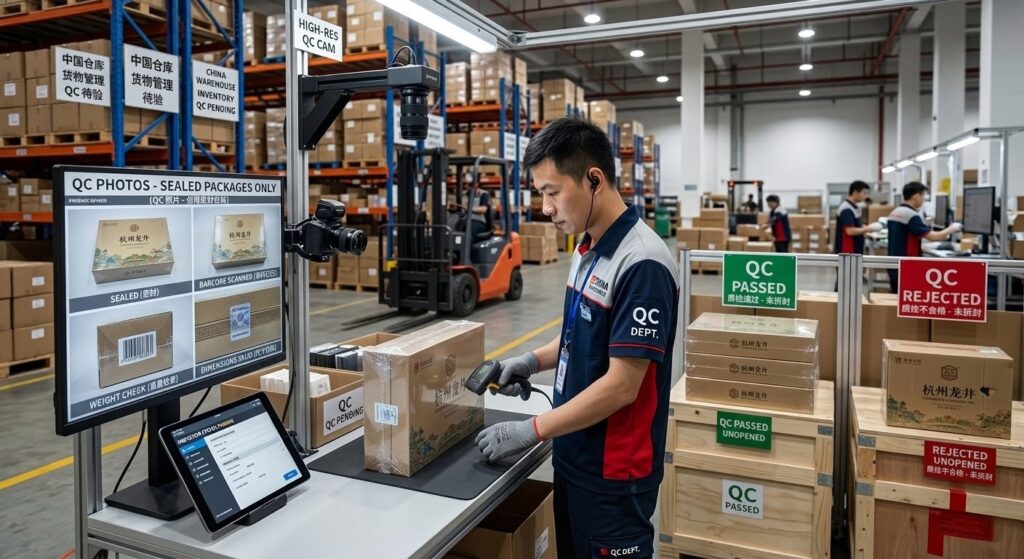
When looking for a purchasing agent in China, the word "Quality" is thrown around constantly. But what does it actually mean in practice? A professional agent doesn't just "look" at the boxes; they execute a multi-stage Quality Assurance (QA) plan.
Step 1: Factory Audit (Before You Pay)
They visit the factory to check their business license, production capacity, and R&D strength. They ensure the factory isn't a "ghost workshop" that outsources your order to an even cheaper, lower-quality facility.
Step 2: During Production Inspection (DUPRO)
When 20–30% of the goods are finished, the agent checks for "mass production drift." If the color is slightly off or the dimensions are wrong, it can be fixed now. Once the order is finished, it's too late.
Step 3: Pre-Shipment Inspection (PSI)
Following the AQL (Acceptable Quality Level) standards, the agent randomly selects cartons and performs drop tests, function tests, and aesthetic checks. You receive a detailed PDF report with photos and videos before you send the final 70% balance payment.
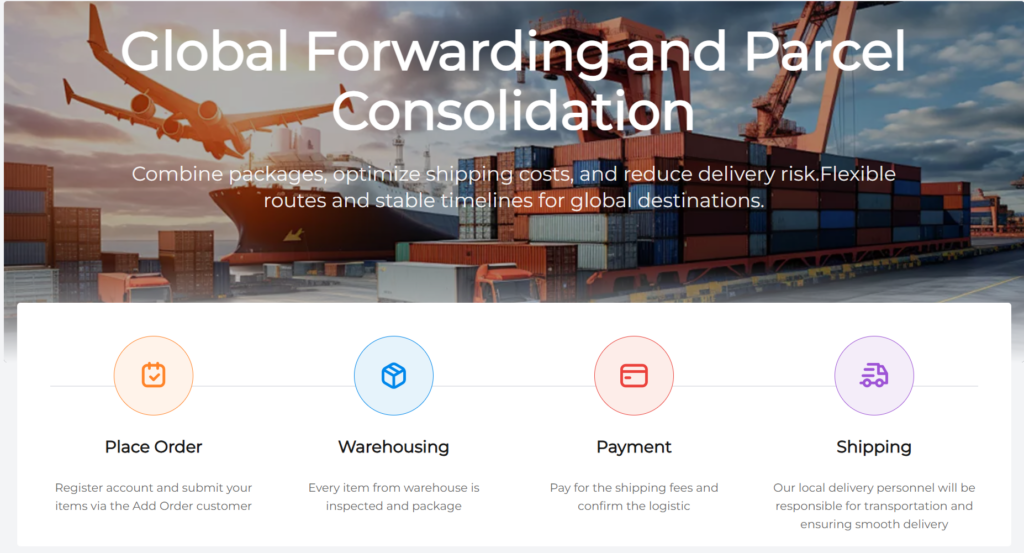
The Hidden Power of "Consolidation"
Many buyers overlook the cost of shipping. If you buy from five different factories, you have five sets of export documents, five local trucking fees, and five international shipments.
A purchasing agent in China with their own warehouse provides Consolidation Services:
- They collect all five orders at their warehouse.
- They repackage items to save space (and money).
- They combine everything into one container or one large air shipment.
- The Result: You save up to 40% on total logistics costs.
How to Vet an Agent: A 2026 Checklist
If you are currently looking for a purchasing agent in China, ask these five critical questions. If they hesitate, walk away.
- "Can I see the original factory invoice?" (A real agent says yes; a trading company says no).
- "Do you take rebates from factories?" (Ask this to gauge their honesty).
- "Do you have your own warehouse for QC?" (Physical infrastructure proves they are a real business).
- "What is your process for 1688.com procurement?" (They should have a clear system for domestic buying).
- "Who owns the supplier relationship if we stop working together?" (A true partner ensures you own the supply chain).
Strategic Recommendation: What is Best for You?
1. The Scaling E-commerce Brand (Amazon FBA / Shopify)
Recommendation: Purchasing Agent (Buying Office).
You need high margins, custom packaging (OEM), and zero quality defects. You cannot afford to be blocked by Amazon for quality issues. The 5-7% service fee is an insurance policy that pays for itself in avoided scams and lower shipping costs.
2. The Niche Wholesale Business
Recommendation: Sourcing Agent (Matchmaker).
If you need a highly technical item (e.g., specialized medical components), you need a specialist scout who understands the engineering. Once the supplier is found, you can manage the repeat orders yourself.
3. The Side-Hustle / Micro-Business
Recommendation: Trading Company.
If you only have $500 to spend, do not hire an agent. Go to a reputable trading company on Alibaba, pay the higher unit price, and treat it as a learning cost.
Conclusion: Building Your 2026 China Supply Chain
The era of "hands-off" sourcing is over. To win in 2026, you need a physical presence in China. Whether you hire a person or an agency, they must be your eyes, ears, and hands on the factory floor.
If you are looking for a purchasing agent in China, prioritize transparency over price. A "cheap" agent who hides their fees will always cost you more in the long run through inferior quality and missed deadlines.
Your supply chain is either your greatest asset or your biggest liability. Which one will you choose to build?