Why Taobao Does Not Accept PayPal Directly and What Buyers Can Do Instead
 Banner
Why Taobao does not accept PayPal directly comes down to how Taobao's checkout system is built. Taobao and Alipay's official payment framework centers on Alipay-managed credit card payment and international payment services, with exchange-rate display, risk control, and payment handling built inside that ecosystem. I could not find any official Taobao or Alipay buyer-facing page that offers PayPal as a native checkout option. In practical buyer guides, PayPal is consistently treated as unavailable for direct Taobao checkout, while card-based or Alipay-based flows are the ones that do exist.
That does not mean overseas buyers have no path at all. In real use, some buyers in supported regions can still pay through Taobao or Alipay with eligible international cards such as Visa, Mastercard, or JCB, usually with restrictions around item type, merchant support, fees, and shipping flow. One current guide notes that international card support is generally tied to physical goods and can involve a service fee. So the real issue is not "Can foreigners ever pay on Taobao?" The real issue is that PayPal is not the native rail, and the remaining payment routes are narrower and less predictable than many overseas buyers expect.
1. Why do so many buyers expect PayPal on Taobao?
Most international shoppers are used to a familiar pattern. They find a product, go to checkout, and expect to see one or more of these:
- PayPal
- Visa or Mastercard
- Apple Pay or Google Pay
- a widely recognized local wallet
Taobao feels different because it belongs to an ecosystem that was built around Alipay, not PayPal. Even Alipay's own public materials describe Taobao and Tmall as shopping functions available through the Alipay app, which shows how closely the commerce and payment layers are tied together.
1.1 What usually happens when an overseas buyer reaches checkout?
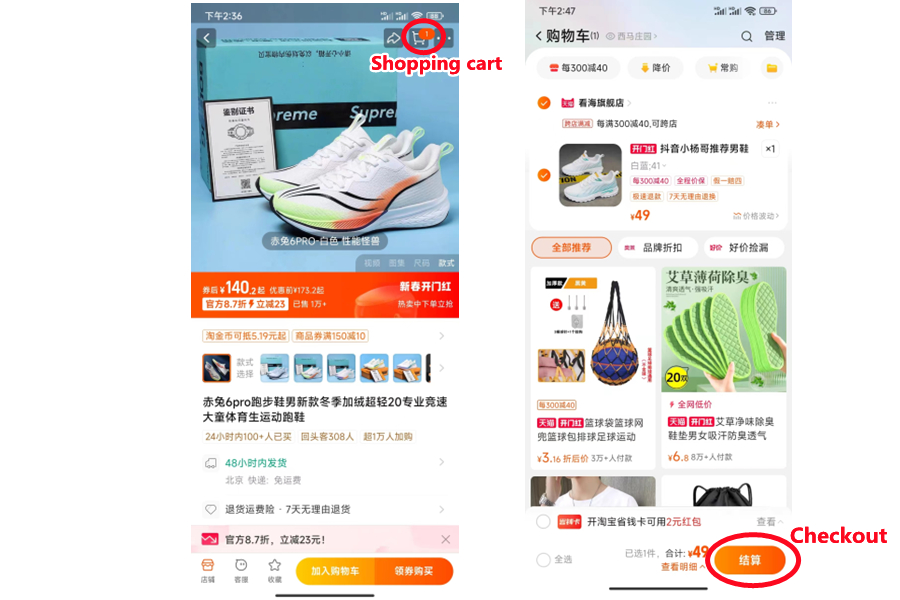
The buyer often gets this far without too much trouble:
- Finds the item
- Translates the listing
- Adds it to cart
- Reaches payment
- Starts looking for PayPal
That is where the friction starts. The official Alipay-Taobao payment agreement talks about credit card payment service and international payment service, with Alipay handling exchange-rate display and payment settlement inside that structure. PayPal is not part of that official architecture. So the buyer is not just missing one button. The buyer is running into a different payment system altogether.
1.2 Is this just a "missing wallet" problem?
No. It is bigger than that.
Taobao checkout is tied to a broader transaction environment that includes:
- seller eligibility
- payment risk control
- foreign-exchange display
- domestic and cross-border logistics
- transaction review and service suspension rules
The same official agreement says Alipay can reject, suspend, or adjust credit-card and international-payment services based on qualifications and risk control. That means the issue is not only whether a buyer has money. It is also whether that specific transaction path is available and approved in that moment.
2. Does Taobao support any direct international payment at all?
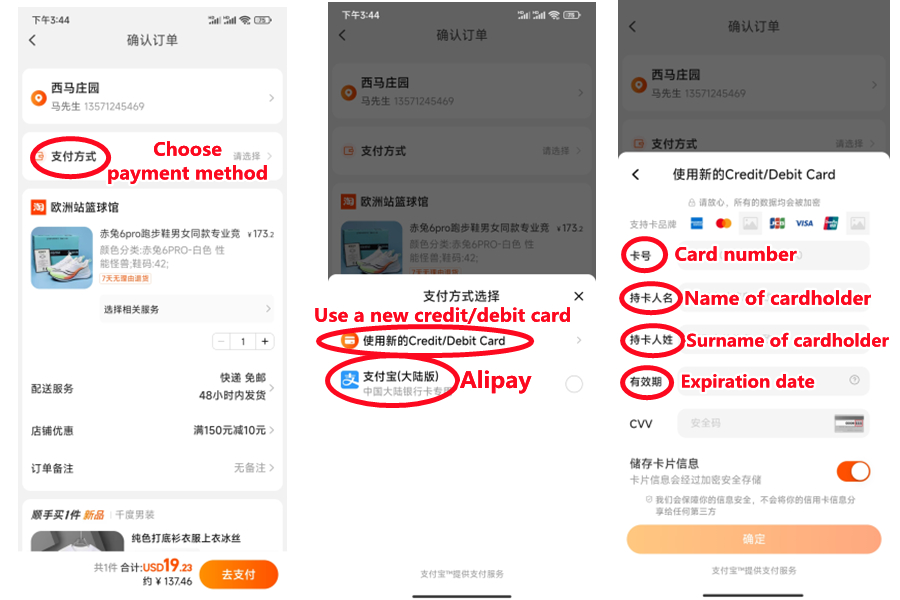
Yes, in some cases.
This is the part many articles get wrong. Saying "Taobao only works for Chinese bank accounts" is too absolute. Official Alipay-Taobao documents clearly refer to credit card payment and international payment services. Practical guides for overseas users also say that Taobao/Alipay can support some international cards, including Visa, Mastercard, and JCB, though the experience depends on the transaction and can include extra fees. One guide also notes that these supported card flows are generally limited to physical goods.
That means two things can be true at the same time:
- Taobao does not directly accept PayPal
- some overseas buyers can still pay directly through eligible Alipay or card-based flows
Those are not contradictory statements. They describe two different payment routes.
2.1 So why do overseas buyers still get stuck?
Because "international payment exists" does not mean "every checkout works."
Real friction points include:
- not every seller is set up for the same payment options
- not every item is suitable for cross-border checkout
- shipping method can change what payment is possible
- service fees may apply
- payment support can be affected by risk controls
The official payment agreement makes this clear from the seller side: these services are enabled, adjusted, or suspended according to platform rules and risk decisions. That is one reason checkout can feel inconsistent across items or accounts.
3. Why doesn't Taobao just add PayPal directly?
There is no single official sentence that says, "Taobao refuses PayPal because of X." But the structure is still easy to read.
Taobao's own payment framework is already built around Alipay-controlled card and international payment services, with the exchange rate shown through the payment page and the transaction settled through Alipay's cross-border mechanism. That means Taobao is not operating like an open marketplace that simply plugs in every global wallet. It is operating through a tightly integrated in-house payment stack. That is a reasonable inference from the official agreement.
A second reason is transaction control. The official rules give Alipay broad authority to cancel, suspend, or restrict transactions when it sees abnormal risk, unauthorized use, or compliance issues. That kind of control is easier to maintain when the platform keeps payments inside its own rails. Again, the official documents do not say "therefore no PayPal," but they do show that Taobao's payment design is centered on Alipay's own control layer.
4. What problems do overseas buyers face even when direct Taobao payment is possible?
This is where direct checkout and successful shopping stop being the same thing.
A buyer may be able to place an order and still run into one or more of these problems:
4.1 Limited seller coverage
Some Taobao merchants focus on domestic China fulfillment first. Even if a foreign card can work, the seller may not support a convenient direct international flow for that item.
4.2 Higher friction at shipping stage
Cross-border orders often involve different handling rules, separate international shipping decisions, and extra payment steps. Even third-party guides that are positive about Taobao card support still note service fees and route limitations.
4.3 VAT, import tax, and final landed cost
A product that looks cheap on Taobao can become less cheap after shipping, tax, and fees are added. That is a real shopping issue, not just a payment issue.
4.4 No easy pre-shipment inspection for the buyer
Direct buyers usually cannot physically inspect the item before it leaves China. If the listing photos are unclear, or if the product category has quality variance, that creates extra risk.
This is why many overseas users are not only asking "Can I use PayPal?" They are really asking a larger question: How do I complete the purchase safely, clearly, and with less friction?
5. What can buyers do instead if PayPal is not available?
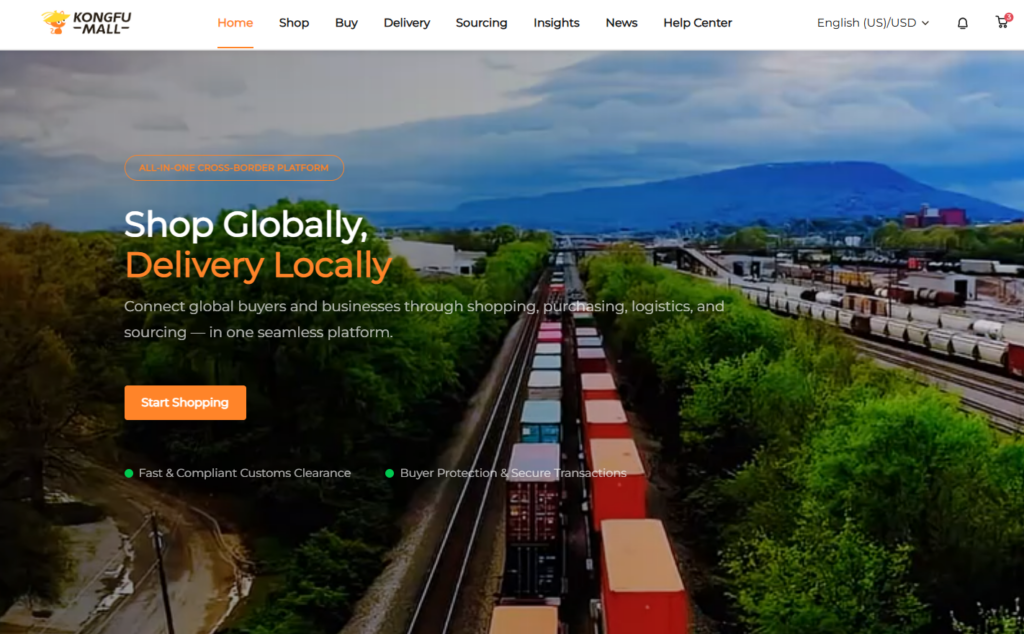
There are usually two realistic paths.
5.1 Try direct Taobao checkout first, but only if your order is simple
Direct checkout may be worth trying when:
- the item is straightforward
- your region is supported
- your card works in Alipay or Taobao's supported flow
- the seller can ship cleanly
- you are comfortable handling the process yourself
This works best for lower-friction orders where you do not need extra sourcing help, inspection, or complicated logistics.
5.2 Use a buying agent or proxy workflow when the order is more complex
This is where a platform like KongfuMall becomes a practical replacement for PayPal-based checkout.
In this workflow, the buyer does not need Taobao to accept PayPal directly. Instead:
- The buyer pays KongfuMall
- KongfuMall uses its own RMB funds to buy the item on Taobao
- The platform confirms the goods with the buyer
- After buyer approval, the shipping bill is confirmed
- KongfuMall uses its logistics system to send the parcel to the buyer
That changes the problem completely. The buyer is no longer trying to force PayPal into Taobao's checkout. The buyer is using a middle-layer service that can operate inside China's domestic payment environment and then bridge the order outward.
6. Why is KongfuMall a stronger alternative than "just find another card"?

Because the real issue is often not only payment.
A reliable workaround should solve multiple bottlenecks at once:
- payment
- domestic procurement in RMB
- seller communication
- item confirmation
- shipping coordination
- final delivery
That is why a platform model can be stronger than a single card workaround. Even if a foreign card works on one day for one item, it does not automatically solve product sourcing, seller follow-up, quality confirmation, or international parcel handoff.
6.1 What makes this route useful for overseas buyers?
It is especially useful when:
- Taobao checkout does not show a usable payment path
- PayPal is preferred on the buyer side
- the buyer wants a more guided process
- the item needs domestic China procurement first
- the buyer wants a platform to coordinate the logistics end-to-end
For overseas buyers, that is often closer to the real need than a narrow "payment method" answer.
6.2 What if the product is not easy to find directly?
That is another reason this model works well. If the item is not easy to purchase through standard direct browsing, a sourcing-style workflow can help buyers reach products from Taobao and other mainland platforms without depending on Taobao's native checkout alone.
7. What should buyers ask themselves before choosing a route?
Before deciding, ask these five questions:
7.1 Do I only need a payment method, or do I need a full buying workflow?
If you only need a quick direct checkout and your card works, direct payment may be enough.
If you also need procurement, confirmation, or logistics help, a platform route makes more sense.
7.2 Is the item simple or high-risk?
Low-risk items are easier to buy directly. High-variance items benefit from a more controlled workflow.
7.3 Am I comfortable dealing with Chinese-platform friction on my own?
That includes language, seller messaging, payment rules, and shipping updates.
7.4 Do I need PayPal on my side even if Taobao does not support it directly?
If yes, the practical answer is usually not "keep refreshing Taobao checkout." It is "use a platform that can take your side's payment and complete the China-side purchase for you."
7.5 Do I want end-to-end delivery, not just payment approval?
That is the real decision point for many buyers.
8. Final answer: what should buyers do when Taobao does not accept PayPal directly?
Taobao does not accept PayPal directly because its payment architecture is built around Alipay-managed credit card and international payment services, not around PayPal checkout. Official payment documents show that the system is designed for Alipay's own settlement, FX display, and risk control rules. At the same time, some overseas buyers can still complete certain purchases using supported foreign cards, so the platform is not completely closed to international buyers.
But for many buyers, the better question is not "How do I force PayPal into Taobao?" The better question is "What is the most reliable way to finish the purchase?" For straightforward orders, direct card or Alipay-based checkout may be enough. For more complicated cross-border orders, a platform like KongfuMall is often the cleaner solution: the buyer pays the platform, the platform buys in RMB, confirms the goods, then handles the logistics until the parcel reaches the buyer.
That is why the most practical answer is simple: Taobao does not need to accept PayPal directly for overseas buyers to complete the purchase. They just need the right route.
Read More:
Can You Use PayPal on Taobao? A Practical Workaround for Overseas Buyers