Too Many Packages, Too Much Confusion: A Better Way to Ship Small Orders From China
 Feimis
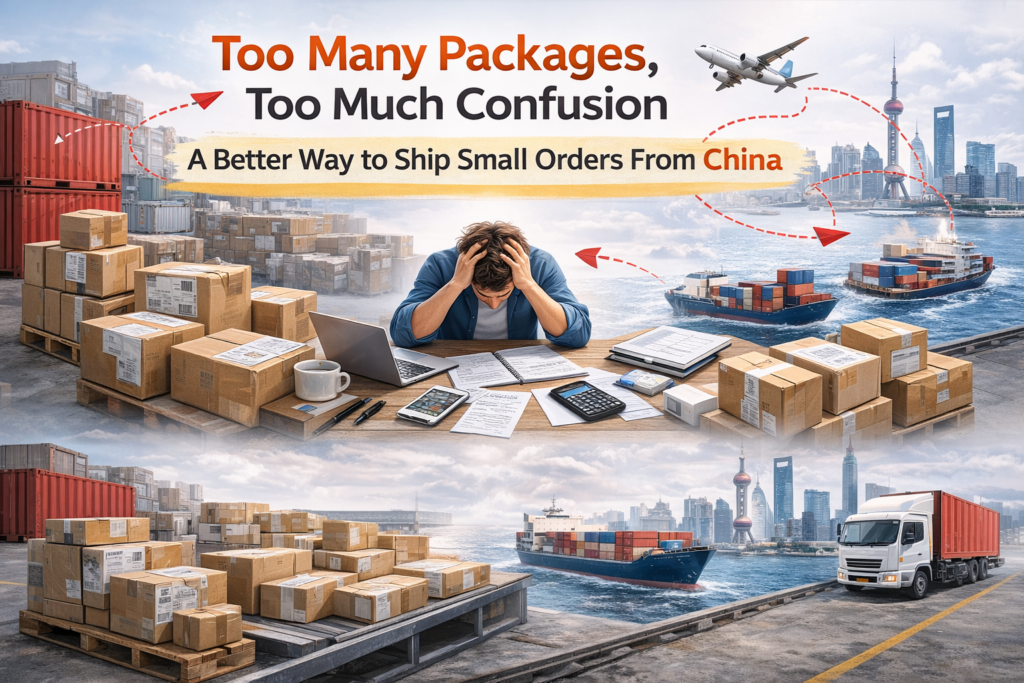
There is a moment when almost every overseas buyer reaches when ordering small orders from China starts to feel less exciting and more exhausting.
At first, it looks simple. One supplier has the pouch you want. Another has better packaging. A third has lower prices on accessories. You place a few orders, wait for updates, and tell yourself this is how smart sourcing works.
Then the messages start.
One package has shipped. Another is delayed. A seller sends the wrong color. One tracking number stops updating. Another parcel is too expensive for its size. You realize you are not just buying products anymore. You are trying to manage a messy logistics puzzle across multiple sellers, multiple parcels, multiple shipping fees, and multiple risks.
This is exactly why so many people struggle to ship small orders from China efficiently.
The real problem is not that China has too many suppliers. The real problem is that buyers are often forced to manage each parcel separately, even when the final goal is only one thing: to receive everything safely, clearly, and at a reasonable cost.
If you are tired of chasing sellers, guessing shipping options, and paying too much for fragmented deliveries, this guide is for you. In this article, we will break down why small air parcels become such a problem, what usually goes wrong, and why a small-parcel consolidation tool is the smarter way to ship small orders from China. Most importantly, we will explain how that process can be handled in a practical way through KongfuMall.
Why small orders from China feel easy at the beginning
One reason buyers underestimate the challenge is that the front end looks so easy.
Products are everywhere. Prices look attractive. Minimum order quantities are often low enough to feel manageable. For startups, resellers, content creators, boutique owners, and even individual buyers, small orders from China seem like the perfect low-risk way to test products without committing to large inventory.
That part is true.
What people do not see early enough is what happens after payment. The sourcing side may be light, but the shipping side becomes heavy very quickly. The more scattered your suppliers are, the harder it becomes to ship small orders from China without confusion.
This is where emotions change. What started as excitement turns into hesitation. What felt like control starts to feel chaotic. Buyers begin asking the same questions over and over:
Where is my second package?
Why is this shipping fee higher than the product itself?
Why did three suppliers pack things in three completely different ways?
Why am I paying repeated international fees for orders that should have been managed together?
These are not small frustrations. They are signals that your shipping method is broken.
The hidden problem with small air parcels
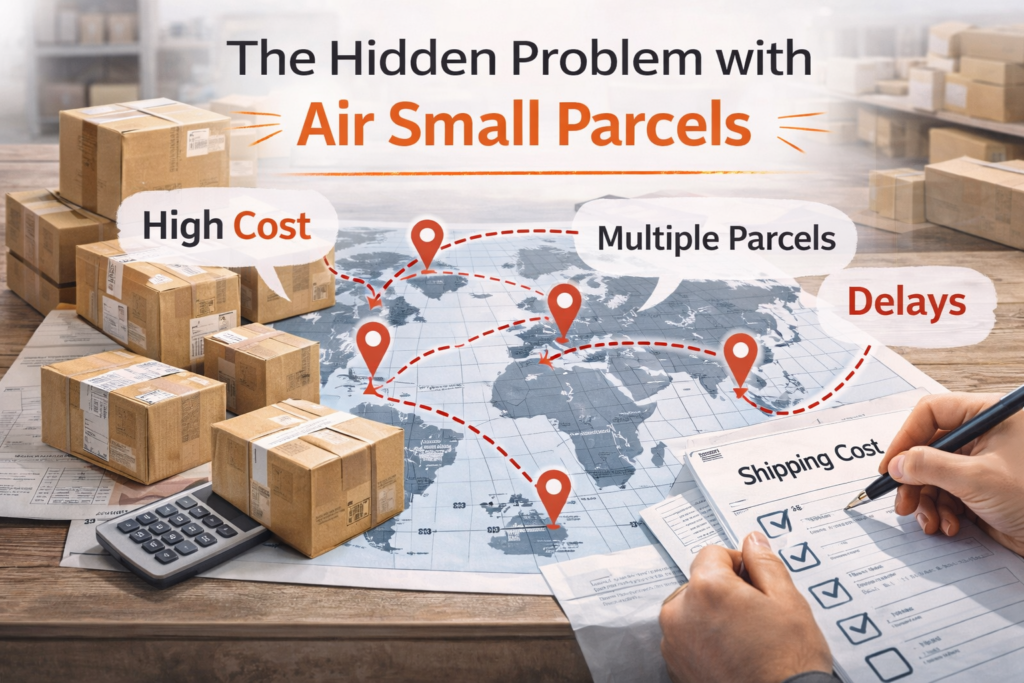
Air shipping sounds fast, modern, and convenient. In many cases, it is. But when buyers try to ship small orders from China one parcel at a time, shipping small parcels can become one of the most inefficient parts of the process.
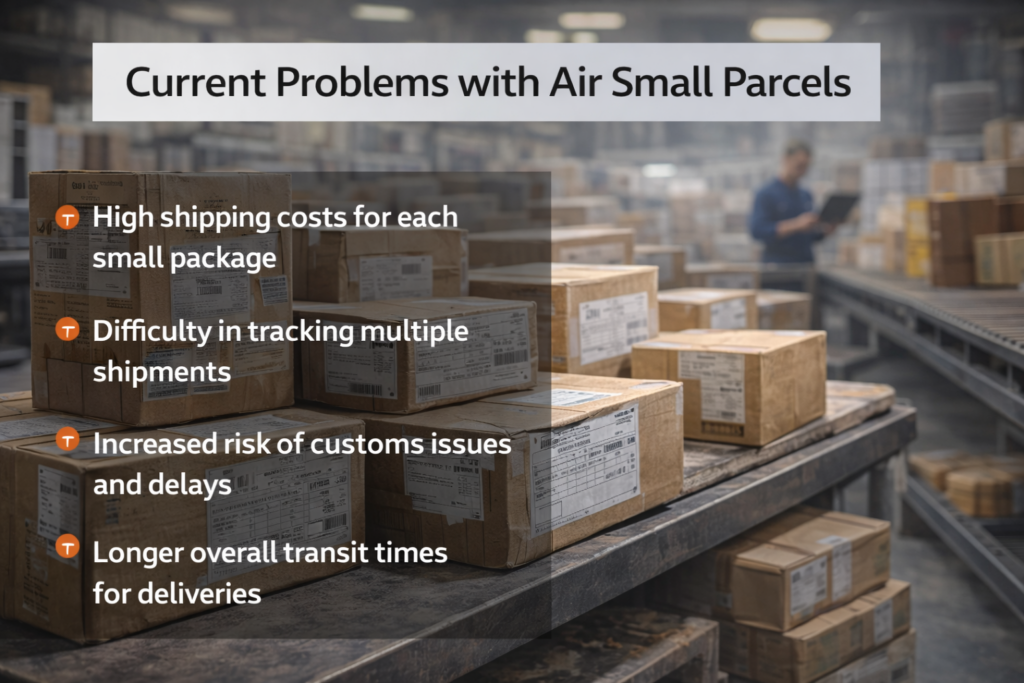
Each parcel may look cheap by itself, but the total cost adds up fast. Repeated handling fees, repeated label creation, repeated customs paperwork, repeated last-mile charges, and repeated international processing can turn a "small order" into a surprisingly expensive shipment plan.
There is also the problem of inconsistency.
One supplier packs carefully. Another throws products into a thin bag. One seller ships on time. Another takes days just to print a label. One parcel arrives in five days. Another takes two weeks, and no one can explain why.
When buyers try to ship small orders from China through separate air parcels, they lose visibility and control. They are not managing one shipment. They are managing a cluster of risks.
That is the part many people do not realize until they are already stressed.
Why do too many packages create more than just extra cost?
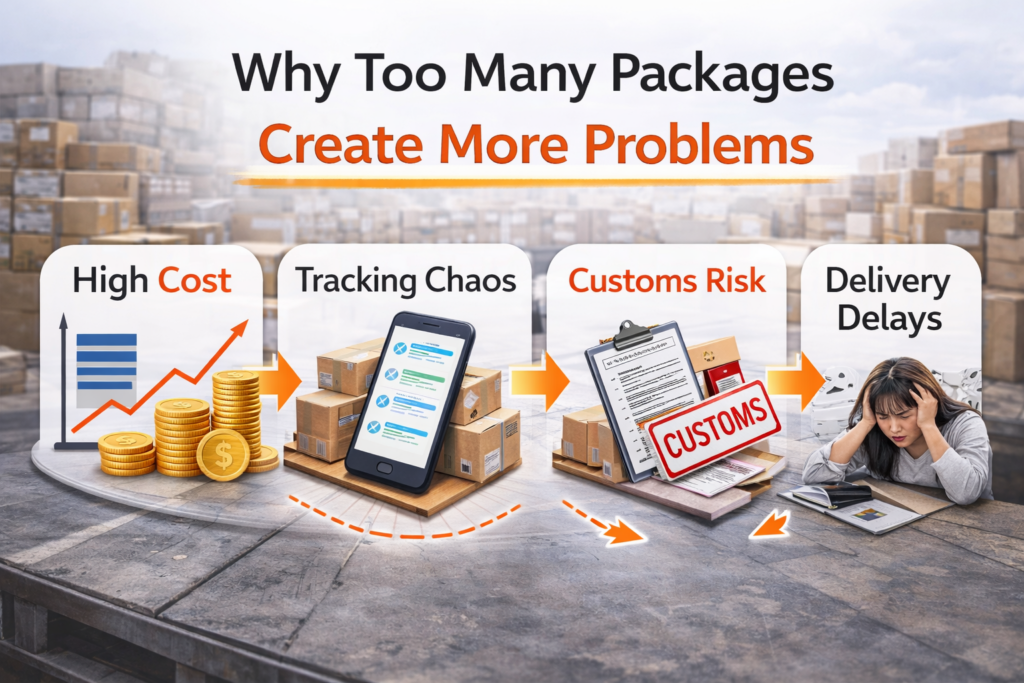
Too many packages not only hurt your wallet, but also hurt your clarity.
Every extra parcel creates another tracking number, another delivery window, another customs chance, another communication thread, and another opportunity for something to go wrong. If you are running a small business, this slows down launch timing. If you are reselling, it delays listing plans. If you are buying samples, it distorts your testing schedule. If you are sourcing for clients, it makes you look less organized than you really are.
This is why people searching for a better way to ship small orders from China are usually not just looking for cheaper freight. They are looking for peace of mind.
They want to know:
Are all products correct before export?
Can everything be sent to one place first?
Can I combine parcels instead of receiving them one by one?
Can someone help me decide the most reasonable shipping route?
Can I stop feeling like I am doing warehouse work from my phone?
That desire is completely valid. It is also why a tool-based shipping workflow matters.
What buyers usually get wrong about small parcel shipping
Many people think the answer is simply "find better suppliers." Better suppliers help, of course. But even good suppliers usually think about their own shipment, not your total shipment strategy.
That means the core issue remains.
If five suppliers each ship separately, you still face the same problem. You still need to ship small orders from China through a fragmented system. Better sellers do not automatically create a better shipping structure.
Another common mistake is assuming faster always means smarter. Sometimes, a direct air parcel feels efficient because it leaves quickly. But if you have three more parcels leaving at different times, you have not really improved the process. You have just multiplied it.
The smarter question is not "Which supplier can ship fastest today?"
The smarter question is "How do I build one manageable workflow for all my small orders from China?"
That is where the idea of a consolidation tool becomes powerful.
What a small-parcel consolidation tool actually means
A small-parcel consolidation tool is not just a page with shipping prices. It is a structured workflow that turns scattered supplier parcels into one controlled process.
In simple language, it does five things.
First, it receives products from different suppliers into one place.
Second, it checks the goods before they leave China.
Third, it stores them temporarily while waiting for other parcels.
Fourth, it combines the right items together.
Fifth, it helps choose the most reasonable international shipping method.
This is the missing bridge for people trying to ship small orders from China without losing time, money, or sanity.
Instead of managing five outbound packages, you create one clear plan. Instead of reacting to random shipping updates, you build a controlled shipment. Instead of hoping everything is correct, you inspect before export.
That changes the emotional experience completely.
You stop feeling like a buyer chasing parcels.
You start feeling like someone running a system.
Why consolidation works better for small orders from China
The biggest advantage of consolidation is that it transforms chaos into sequence.
When all your small orders from China arrive at one warehouse first, you can finally see the bigger picture. You can compare items, verify quantities, catch packaging issues, and make one shipping decision based on the full order rather than isolated guesswork.
This matters because small orders often grow unexpectedly. What starts as a few products from two suppliers can become packaging materials, accessories, replacement items, samples, and add-ons. Without a consolidation system, each new order creates a new parcel problem.
With consolidation, each new order simply joins the same workflow.
That is why many experienced buyers eventually stop asking how to get each supplier to ship internationally. Instead, they ask how to ship small orders from China through one warehouse and one platform.
That is the real shift from confusion to control.
Step one: Collect everything in one warehouse first
The first step is simple, but it changes everything.
Do not ask every supplier to ship directly to your country. Ask them to ship domestically within China to one warehouse address instead. This is how you begin to ship small orders from China intelligently.
Domestic supplier-to-warehouse transfers are usually easier to manage than multiple international parcels. It also creates a natural checkpoint before export.
This is important emotionally as well as practically. Once all orders are moving toward one location, the process feels calmer. You are no longer staring at multiple international parcels flying around with no coordination. You are building one shipment step by step.
A centralized warehouse is where small order shipping starts making sense.
Step two: inspect before you send anything overseas
This is one of the most overlooked steps when people try to ship small orders from China.
If a supplier sends the wrong size, wrong color, damaged product, missing accessories, or poor-quality packaging, you want to catch that before international shipping begins. Once a parcel is overseas, every mistake becomes harder and more expensive to fix.
Inspection is not only about quality control. It is also about emotional control.
When buyers skip inspection, they carry uncertainty all the way through transit. They keep wondering whether the parcel contains the right items. That worry lasts until the package is opened.
A warehouse inspection process removes a huge part of that stress. Photos, quantity checks, and basic condition verification give buyers confidence before the final shipment is created.
For anyone who regularly needs to ship small orders from China, this is not a luxury. It is a practical safeguard.
Step three: Hold parcels until the order is complete
This step sounds small, but it solves a major problem.
When one supplier ships faster than another, buyers often panic and send whatever has arrived first. That is how shipping becomes fragmented. That is how unnecessary air small parcels multiply.
A better method is to hold the early-arriving goods in warehouse storage until the rest of the order is ready. This patience is what allows you to ship small orders from China as one smarter package instead of several rushed ones.
Temporary storage is especially useful for sample orders, mixed SKU orders, startup trial runs, and low-volume wholesale purchases. It gives you breathing room. It turns timing differences into manageable logistics instead of repeated export events.
In many cases, the best shipping decision is not the fastest first move. It is the most organized final move.
Step four: combine the right items, not just all items
Consolidation does not mean blindly throwing everything into one carton.
A good system looks at product type, packaging needs, weight, fragility, and destination efficiency. Some items should travel together. Some need extra protection. Some may be better split strategically. The point is not just to combine parcels. The point is to combine them wisely.
This is where many buyers realize they do not just need forwarding. They need judgment.
To ship small orders from China well, you need someone or something that understands the difference between "possible" and "sensible." Just because ten items can go into one carton does not always mean they should.
A real small-parcel consolidation tool helps create the best version of the shipment, not just the most compressed version.
Step five: choose the shipping route based on the whole order
Only after collection, inspection, storage, and consolidation should the final shipping method be chosen.
This is the mistake many first-time buyers make. They chose shipping too early. They do it before they know the total weight, final dimensions, full item mix, or urgency level.
When you wait until the order is complete, you can evaluate the shipment properly. That makes it much easier to ship small orders from China in a way that balances cost, speed, and reliability.
For some orders, air small parcel service still makes sense. For others, a better route may exist once items are consolidated. The important thing is that the decision is made with complete information, not partial information.
That one change alone can prevent a huge amount of waste.
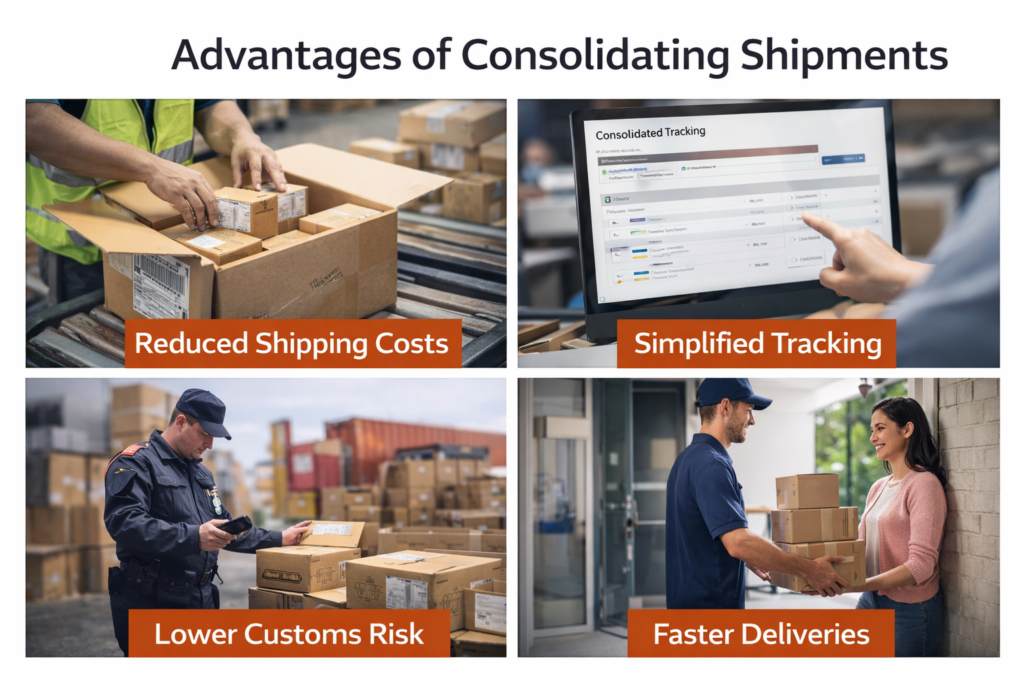
What this looks like in real life
Imagine you are ordering ten small items from four different suppliers in China.
Without consolidation, each supplier may send directly to you. That could mean four international tracking numbers, four packaging standards, four separate shipping charges, and four separate delays. If one item is wrong, you discover it after international arrival. If one parcel is late, your whole plan feels incomplete.
Now imagine the same order handled through one warehouse workflow.
All four suppliers ship domestically to one receiving point. The goods are checked, photographed, held together, and prepared into one organized shipment. You review the order status, confirm the final package, and then ship small orders from China through a single, clearer export step.
The difference is not just financial. It is emotional.
One process feels scattered.
The other feels intentional.
One process makes you react.
The other lets you decide.
Why KongfuMall fits this workflow so naturally
This is exactly where KongfuMall comes in.
If you are searching for a better way to ship small orders from China, KongfuMall makes sense because the platform is not only about buying. It connects the missing parts between purchase and delivery: receiving, inspection, warehouse handling, consolidation, and international shipping support.
That matters because most buyers do not actually need "more suppliers." They need one place to manage what happens after supplier payment.
KongfuMall can function as the practical tool behind this entire workflow. Instead of letting every seller create a separate international parcel, you can route your small orders from China into one managed system. Products can be received into the warehouse, checked before export, stored if needed, combined more efficiently, and then sent through a more sensible shipping plan.
This makes KongfuMall valuable not only for large sourcing projects, but also for the everyday reality of mixed, messy, small-volume purchasing.
And that is the real point.
A useful tool is not the one that looks impressive in theory.
A useful tool is one that reduces confusion in real buying situations.

The emotional reason this method works better
There is also a human truth behind all of this.
People do not only get frustrated because shipping is expensive. They get frustrated because fragmented shipping makes them feel powerless. Every delayed update, every missing item, every extra fee creates the feeling that the process is happening to them, not for them.
That is why a structured way to ship small orders from China feels so much better. It restores visibility. It restores timing logic. It restores confidence.
You know where parcels are going.
You know they can be checked.
You know they can wait safely.
You know they can be combined properly.
You know the final export decision happens after the full order is visible.
That is not just logistics. That is relief.
Common mistakes to avoid
Even with a better system, there are still a few mistakes buyers should watch for.
Do not rush international shipping before all expected parcels arrive.
Do not skip inspection just to save a little time.
Do not assume every small parcel is automatically the cheapest option.
Do not let each supplier decide the final shipping logic for your whole order.
Do not confuse "many packages" with "better flexibility."
If your real goal is to ship small orders from China smoothly, your priority should be process design, not parcel quantity.
Final thoughts
Too many packages create too much noise. Too many separate air parcels create too many chances for delay, waste, mistakes, and stress. That is why more buyers are rethinking how they ship small orders from China.
The smartest path is usually not sending everything separately and hoping for the best. The smarter path is building one workflow that receives, checks, stores, combines, and then ships with purpose.
That is what a small-parcel consolidation tool is really for.
And that is why a platform like KongfuMall matters.
Because when you are trying to ship small orders from China, what you need most is not more parcel movement. You need more order. More visibility. More control. More confidence.
When the process becomes clear, the shipping becomes easier.
When the shipping becomes easier, the business feels lighter.
And when the business feels lighter, you can focus again on what really matters: choosing the right products, serving your customers, and growing without chaos.