Why Some Small Parcels Arrive Smoothly-and Others Turn Into a Mess
 Feimis
If you have ever bought from China and wondered why one parcel arrived perfectly while another turned into a stressful, expensive mess, you are not imagining things.
Some small parcels move through the system quietly. They get packed properly, tracked clearly, cleared smoothly, and delivered without drama. Other small parcels seem to attract every possible problem. Tracking becomes vague. Packaging feels careless. Customs questions appear. Delivery slows down. Communication breaks. What should have felt simple suddenly feels exhausting.
That difference matters more now than it did a few years ago. Air cargo demand stayed resilient through 2025, Asia-Pacific cargo activity remained strong, and at the same time, low-value parcel rules into the U.S. tightened sharply, which means today's small parcels are moving through a market that is both active and more compliance-sensitive.
This is why buyers need more than luck. They need a method.
In this guide, we will break down why some small parcels arrive smoothly, why others turn into a mess, what the market is doing right now, what buyers usually get wrong, and how a platform like KongfuMall can make small parcels far easier to control.
Why does this topic matter more in the current market?
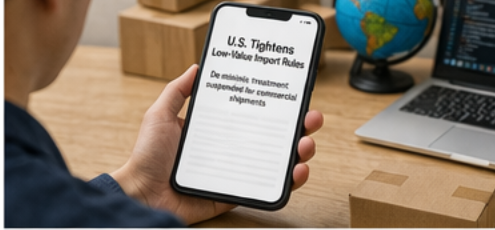
The market has changed.
Buyers still want fast, affordable delivery. But shipping networks, customs screening, and low-value parcel rules are no longer as forgiving as many buyers assume. In the U.S., de minimis treatment has been tightened and suspended through multiple policy changes, and official guidance now reflects a much stricter environment for low-value commercial shipments. That means small parcels are no longer judged only by speed and price. They are judged by documentation quality, routing logic, visibility, and handling discipline, too.
That is why one buyer's small parcels can look easy while another buyer's small parcels fall apart. The market is rewarding structure and punishing carelessness.
Some small parcels arrive smoothly because the process was clean from the start.
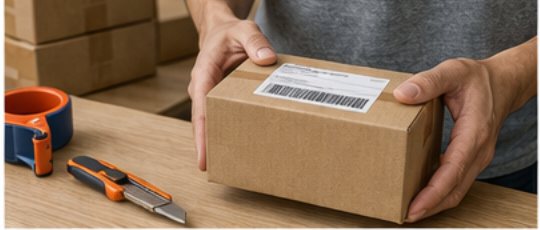
Smooth delivery usually looks boring.
That is a good thing.
When small parcels arrive smoothly, there is often no mystery behind it. The seller packed them sensibly. The parcel dimensions were reasonable. The shipping choice matched the product type. The paperwork was not sloppy. The buyer knew what was being sent and when. Tracking was readable. Nothing needed to be guessed halfway through the journey.
In other words, the parcel did not become successful by accident. It became successful because the process was clean before the parcel even left China.
That is one of the biggest lessons buyers miss. People often look at delivery outcomes and call them "good luck" or "bad luck." But with small parcels, outcomes are usually shaped much earlier than that.
Other small parcels turn into a mess because several tiny problems stack together.

Messy delivery is rarely caused by one huge disaster.
More often, small parcels go wrong because several small weaknesses build on top of one another. A seller uses oversized packaging. A buyer chooses direct shipping too early. Tracking is fragmented across multiple parcels. The shipment leaves before the buyer has seen real photos. One item is urgent, but everything is forced into the same shipping rhythm. Then, customs or final-mile delivery adds another delay.
Now the buyer is not dealing with one problem.
The buyer is dealing with a chain reaction.
That is why some small parcels feel cursed. They are not cursed. They were simply sent through a weak workflow.
The first big difference is the seller structure.

One seller is one kind of shipment.
Three sellers are another story.
A lot of buyers source from multiple Chinese sellers because that is often the smartest way to get the best price, the best style, or the exact item mix they want. But this is also the moment when small parcels start becoming harder to control. Every extra seller increases the chance of different packaging habits, different shipping speeds, different communication quality, and different levels of care.
This is where smooth small parcels and messy small parcels begin to separate.
If the goods are gathered and organized before international delivery, the buyer stays in control. If every seller ships separately and the buyer just hopes for the best, disorder usually shows up later.
Packaging quality matters more than most buyers expect
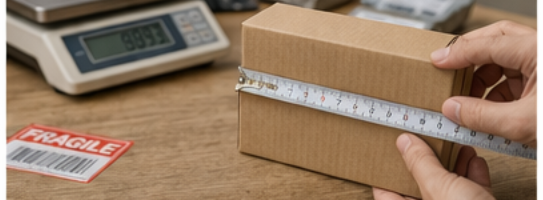
Many buyers think the product matters most.
The product matters, of course. But when it comes to small parcels, packaging often decides whether the journey stays calm or becomes expensive and risky.
Small boxes can still be packed badly. A parcel can be light but still costly because the carton is too large. Fragile goods can be underprotected. Loose internal packing can create damage. Cheap outer cartons can collapse. Odd box shapes can trigger awkward dimensional pricing or rough handling issues.
This is why some small parcels arrive looking neat and professional, while others arrive crushed, delayed, or suspiciously expensive.
Smooth small parcels usually have one thing in common: someone thought about packaging before shipping. Messy ones usually reveal that nobody really did.
Shipping method selection changes everything.

A parcel is not only a box. It is also a route choice.
This is where many buyers make emotional decisions. They see a faster line and click it. Or they choose the cheapest option without asking what kind of tracking, handling, or customs predictability comes with it.
Not all small parcels should move the same way.
Some need faster service because the buyer is time-sensitive. Some should wait and be grouped. Some should not be rushed into direct export at all. In today's market, where air cargo is still active, but policies and trade lanes can shift quickly, the wrong shipping choice can turn ordinary small parcels into delayed or expensive ones.
That is why smart buyers stop asking only, "What is the cheapest method?"
They start asking, "What is the right method for these small parcels?"
Timing mistakes create more trouble than buyers realize
Timing is one of the least respected parts of parcel shipping.
Some buyers send small parcels too early because they feel anxious. One parcel arrives at the warehouse, and they want movement immediately. They do not want to wait for the rest. They fear delay more than inefficiency.
But rushed timing often creates the exact mess they were trying to avoid.
One package goes now. Another later. A third after that. Suddenly, the buyer is managing multiple international deliveries instead of one structured shipment plan. Tracking becomes noisy. Costs repeat. Customs exposure repeats. Delivery windows stop matching. Emotionally, the order no longer feels organized.
This is why smooth small parcels often come from patience, not panic.
Tracking quality separates calm buyers from stressed buyers.
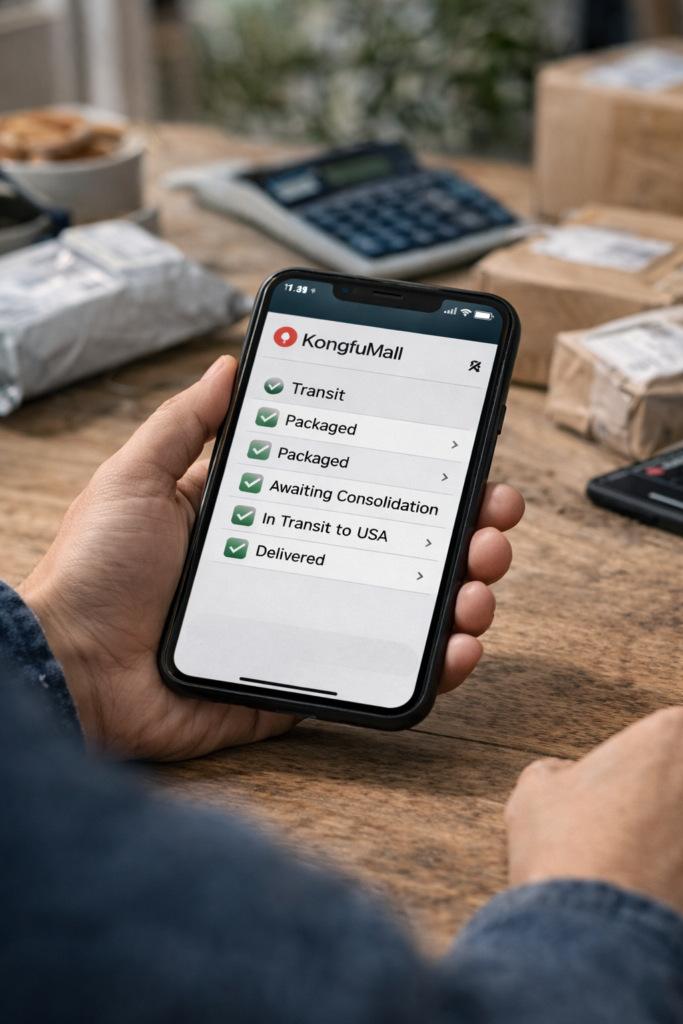
Tracking is not just a convenience.
For small parcels, tracking is essential for stability.
If a buyer has one clean outbound shipment with readable updates, the process feels manageable. If the buyer has many scattered small parcels moving on different timelines, tracking can become mentally exhausting. One parcel says departed. One says customs. One says no update. One says the final-mile issue. That is when buyers stop feeling like customers and start feeling like unpaid shipping coordinators.
KongfuMall's own published tracking guide says its system is designed around consolidated handling, packaging, and shipping so buyers can view shipments from one dashboard instead of chasing scattered carrier updates. That kind of visibility is one of the reasons smoother, smaller parcels feel so much less stressful.
Inspection is one of the hidden reasons some small parcels stay smooth.
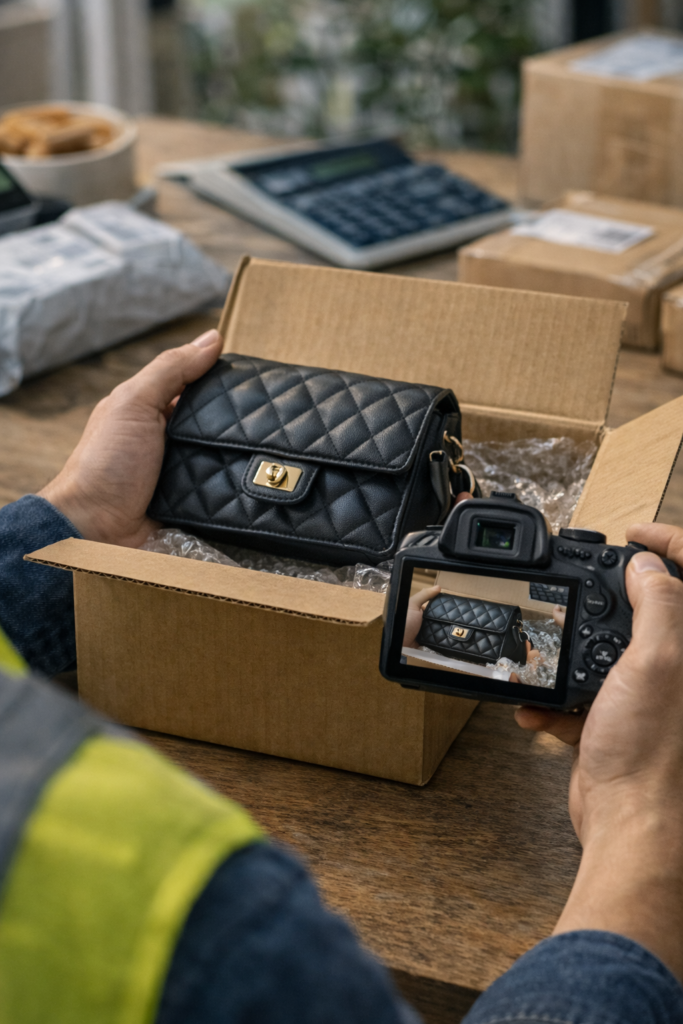
Inspection is boring until you don't have it.
Then it becomes the thing you wish you had.
A lot of messy small parcels become messy because buyers find problems too late. Wrong quantity. Wrong color. Damaged packaging. Missing accessory. Poor condition. Once the parcel is overseas, fixing that problem becomes far more expensive and emotionally draining.
This is why inspection is one of the quiet advantages behind smooth small parcels.
KongfuMall's parcel-consolidation guide says parcels received in the warehouse are scanned and uploaded with parcel information and photos, allowing buyers to review what arrived before choosing whether to consolidate, store, or ship individually. That one checkpoint changes the experience dramatically. It means small parcels are no longer moving blindly.
Documentation and customs discipline are now a much bigger deal.
This part is easy to ignore because buyers do not always see it directly.
But customs scrutiny has become much more relevant for small parcels, especially in a tighter, low-value import environment. When markets change, low-value shipments can no longer rely on old assumptions. Product descriptions, declared values, consistency, and shipment structure all matter more. That is especially true for shipments headed into stricter destinations like the U.S. after recent de minimis changes.
This does not mean every parcel is in danger.
It means small parcels are more exposed than they used to be.
Buyers who still think customs is just random bad luck are missing the bigger picture. Often, the difference is preparation.
Why the market now favors parcel consolidation more than before
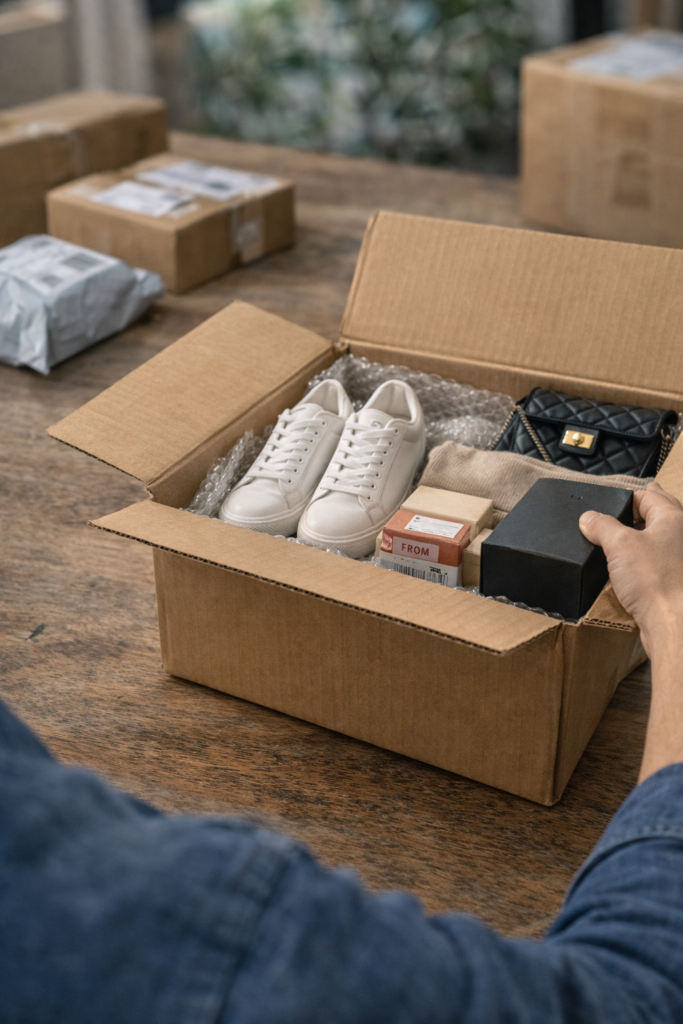
This is where the conversation shifts from problem to solution.
Today, many buyers are discovering that smoother small parcels are often the result of better grouping, better timing, and fewer unnecessary export events. That is exactly why parcel consolidation keeps becoming more relevant.
KongfuMall's own content repeatedly frames consolidation as a way to combine products into fewer international parcels, reduce per-item shipping cost, clean up tracking, simplify declarations, and minimize repetitive packaging. It also explains that consolidation can be complete, partial, or tied to different shipping speed groups.
That matters because buyers do not need all small parcels treated the same way. They need the freedom to decide what should move together, what should wait, and what should go alone.
What smooth, small parcels usually look like in practice
Smooth small parcels usually follow a pattern.
They come from a process where the goods were received in one warehouse first. They were checked. The buyer had visibility. The shipment was grouped logically. Packaging was improved where necessary. Timing was chosen deliberately. Tracking became cleaner because the process became cleaner.
Nothing about that is glamorous.
But that is the point.
The smoothest small parcels are often the ones that were managed with the least chaos.
What messy small parcels usually look like in practice.
Messy small parcels usually tell a different story.
They were sent too quickly. Or too separately. Or with weak packaging. Or without review photos. Or from too many sellers directly into international delivery with no pause in between. The buyer thought speed would create simplicity. Instead, speed created fragmentation.
That is why the parcel story matters more than the parcel size.
Small does not automatically mean easy.
Low value does not automatically mean low risk.
Fast does not automatically mean smooth.
For small parcels, simplicity has to be designed.
A practical way to stop your small parcels from turning into a mess
Here is the simplest mindset shift:
Do not treat every seller shipment as the final shipment.
Treat the warehouse stage as the decision stage.
This is where KongfuMall becomes useful in a very concrete way. According to its official guides, buyers can send goods from multiple sellers to the KongfuMall warehouse, review parcel photos and details, then choose whether to store, consolidate, or ship individually. Buyers can do complete consolidation, partial consolidation, and even group by shipping speed, so one order does not have to follow one rigid outbound logic.
That is exactly the kind of flexibility that turns risky small parcels into calmer, smarter shipments.
Why does this help buyers trust KongfuMall more?
Trust comes from control.
Buyers do not trust a platform only because it says "fast shipping" or "good service." They trust it when the process feels visible and sane.
KongfuMall's advantage is not just that it helps people buy from China. Its real advantage is that it helps buyers manage what happens after the purchase. Its published materials emphasize multi-seller buying, warehouse receipt, parcel photos, consolidation options, grouped shipping speeds, integrated tracking, and fewer repeated parcel headaches. That is exactly the operational layer that many buyers are missing when their small parcels turn into a mess.
And that is the point of this whole article.
If your small parcels feel random, the answer is not to hope harder.
The answer is to use a better process.
Final thoughts
Some small parcels arrive smoothly because someone built a clean path for them.
Others turn into a mess because too many weak decisions were hidden inside what looked like a simple shipment.
In today's market, that gap matters more than ever. Air cargo is still active, Asia-linked parcel demand remains strong, and import rules for low-value shipments have become stricter in key destinations. Buyers cannot rely on old habits anymore. They need clearer shipping logic, better timing, better review steps, and better control.
That is why the smartest buyers are moving toward systems, not guesswork.
And that is why KongfuMall fits this topic so naturally.
Because when small parcels are received, reviewed, grouped, consolidated, or split with intention, they stop feeling risky and start feeling manageable. That is what builds trust. That is what reduces confusion. And that is what makes buyers far more likely to choose a platform that helps them ship smarter, not just shop faster.